
What do trees gain by losing their leaves?
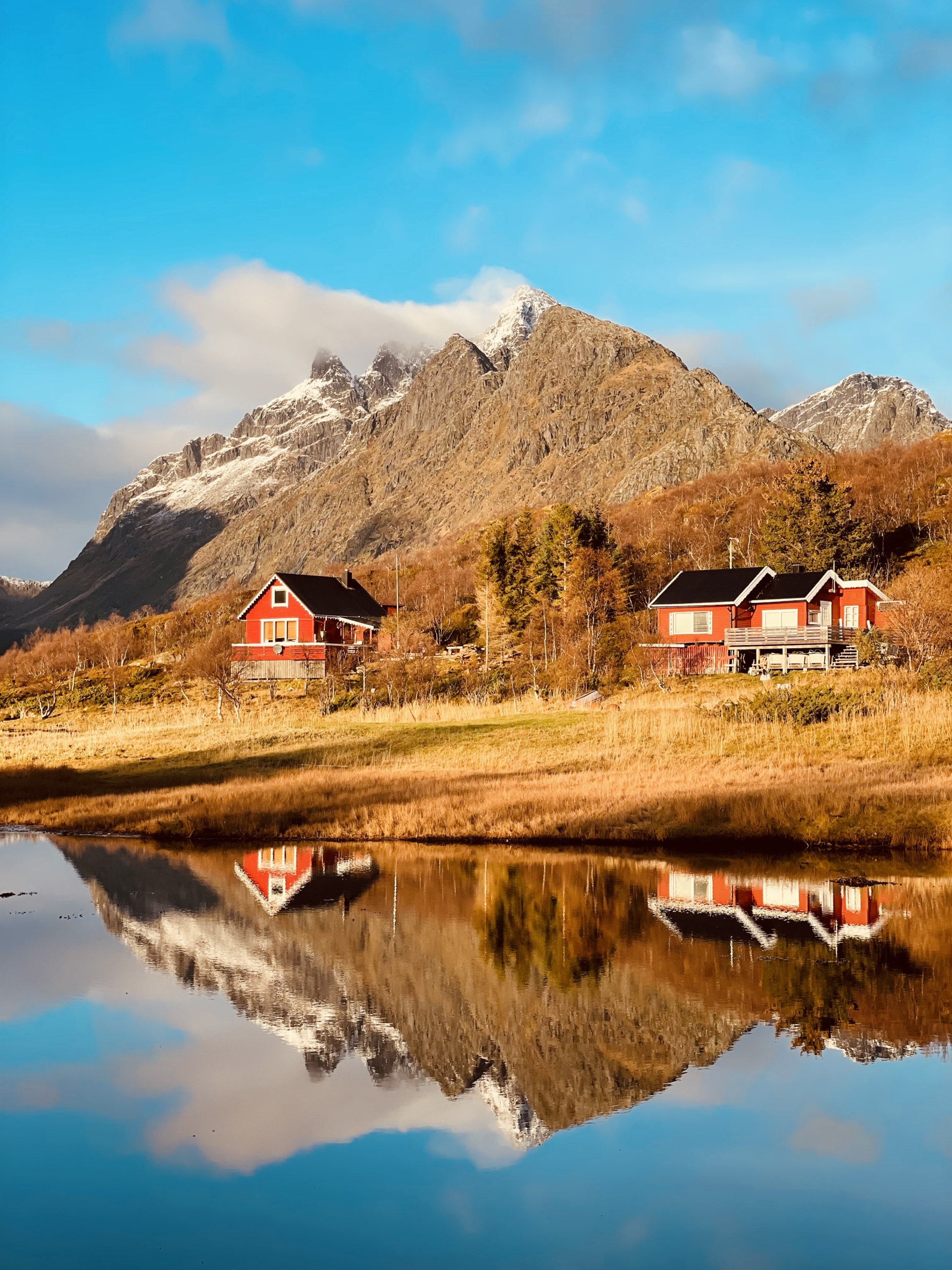
Every fall, forests put on a display of magnificent colors before a carpet of golden leaves covers the ground. Then, little by little, the branches are left bare until spring returns.
Why do oaks, beeches and maples lose all their leaves, while pines, firs and spruces stay green all year round?
Despite appearances, this leaf fall is no sign of weakness. On the contrary, it is a remarkable adaptation strategy, honed over millions of years of evolution.
A matter of saving energy
Trees are true resource managers.
Making a leaf takes a lot of energy: the tree has to build cells, chlorophyll, vascular tissue and a whole structure capable of capturing light.
Deciduous trees, however, have made a different choice from conifers.
Their leaves are thin, broad and very efficient at photosynthesis during the growing season. The trade-off is that they are also much more vulnerable to cold, frost and lack of water.
Keeping them all winter would mean putting very energy-hungry protective mechanisms in place.
For these trees, it ultimately pays off better to grow new leaves every spring than to protect the old ones for several months.
It is a genuine investment strategy: produce quickly, make the most of summer, then start over with fresh leaves the following year.
In winter, leaves become less useful
Leaves are a tree’s power plants.
Through photosynthesis, they use sunlight to make the sugars the tree needs to grow.
But in the fall, the days grow shorter.
The light fades, temperatures drop and photosynthesis slows down sharply.
At some point, the leaves produce less energy than they use to stay alive.
In other words, they cost more than they are worth.
The tree then lets them go in order to save its resources until the warmer days return.
Before letting them fall, the tree recycles everything it can
Leaf fall is not a sudden abandonment.
For several weeks, the tree carefully recovers some of the precious elements they contain.
Nitrogen, phosphorus, magnesium and some of the sugars are gradually moved from the leaves to the trunk, branches and roots, where they are stored throughout the winter.
This recycling partly explains the magnificent fall colors.
As the chlorophyll gradually fades, it reveals other pigments: carotenoids, naturally present in the leaves, which produce yellow and orange hues, and anthocyanins, produced in the fall, which turn some trees red or purple.
Once on the ground, the leaves still have work to do.
Broken down by fungi, bacteria, earthworms and many other organisms, they gradually enrich the soil with organic matter.
Some of these nutrients will then be taken back up by the tree’s roots the following spring.
Nothing goes to waste: the forest works like a vast natural recycling system.
Losing leaves also helps trees weather storms
Leaf fall has another, little-known advantage.
In winter, storms are more frequent and the wind can blow with great violence.
Branches covered with thousands of leaves would catch a lot of wind, greatly increasing the risk of breaking or being torn off.
By shedding their foliage, trees reduce their wind resistance and let the air flow more easily between their branches.
This strategy has proven especially effective during the great storms that have struck Europe.
During the storm of December 1999, many conifers, still laden with their needles in winter, were uprooted or snapped. Deciduous trees, on the other hand, generally held up better thanks to their leafless branches.
Why do conifers keep their needles?
So why don’t firs and pines make the same choice?
Their needles are very different from the leaves of deciduous trees.
Smaller, thicker and coated with a waxy cuticle, they greatly limit water loss and stand up to frost much better.
They are also rich in protective substances that keep their cells from being damaged by freezing temperatures.
These needles can therefore stay functional for several years before being gradually replaced.
For conifers, growing thick, long-lasting leaves is more worthwhile than making new ones every year.
A strategy shaped by evolution
So there is no single right way to survive the winter.
Deciduous trees bet on light leaves that work very efficiently for a few months, then replace them every spring.
Conifers, for their part, invest in sturdier needles that can withstand the harshest conditions for several years.
These two very different strategies are the result of millions of years of evolution, and they allow each species to make the most of its environment.
The next time you see a carpet of leaves covering the ground in the fall, remember that it is not just a sign that winter is coming. It is the culmination of a remarkable strategy of energy saving, recycling and adaptation that has carried trees through the seasons for millions of years.Sail to the Far North
aboard Polarfront
Twelve guests, a seasoned crew and passionate guides: the upcoming departures.
8 days / 7 nights Norway · Northern lightsPhoto voyage in Norway 11 of 12 spots Promo from€2,585 20Dec2026 returning Dec 28 Winter
9 days / 8 nights Norway · Northern lightsWinter magic in Norway 7 of 12 spots Promo from€2,975 28Dec2026 returning Jan 5 Winter
9 days / 8 nights Norway · Northern lightsWinter magic in Norway Only 3 spots left from€5,950 28Feb2027 returning Mar 7 Winter
8 days / 7 nights Norway · Northern lightsNorwegian gems in spring 8 of 12 spots from€5,280 16Apr2027 returning Apr 25 Spring
10 days / 9 nights Spitsbergen · WildlifePolar spring in Spitsbergen 12 of 12 spots from€12,490 25Apr2027 returning May 4 Spring
10 days / 9 nights Spitsbergen · WildlifePolar spring in Spitsbergen 5 of 12 spots from€12,490 4Aug2027 returning Aug 13 Summer
10 days / 9 nights Spitsbergen · WildlifeMidnight sun in Svalbard 11 of 12 spots from€12,620 22Aug2027 returning Sep 1 Summer
11 days / 10 nights Greenland · Northern lightsNortheast Greenland National Park Last spot from€13,880 19Sep2027 returning Sep 26 Fall
8 days / 7 nights Spitsbergen · Northern lightsAutumn escape to Svalbard 12 of 12 spots from€9,720 26Sep2027 returning Oct 4 Fall
9 days / 8 nights Spitsbergen · Northern lightsAutumn lights in Svalbard 10 of 12 spots from€11,110 4Oct2027 returning Oct 12 Fall
9 days / 8 nights Spitsbergen · Northern lightsAutumn lights in Svalbard 12 of 12 spots from€11,110 10Dec2027 returning Dec 18 Winter
9 days / 8 nights Norway · Northern lightsWinter magic in Norway 12 of 12 spots from€6,040 18Dec2027 returning Dec 26 Winter
9 days / 8 nights Norway · Northern lightsWinter magic in Norway 12 of 12 spots from€6,220 26Dec2027 returning Jan 3 Winter
9 days / 8 nights Norway · Northern lightsWinter magic in Norway 12 of 12 spots from€6,220
No upcoming departures for this selection.

An extremely rare aurora has been observed in Spitsbergen
The phenomenon, never before observed from the Earth’s surface, is thought to be the result of a polar rain of electrons coming straight from the solar corona.

What is life like during the polar night?
People who live in Earth’s icy polar regions experience almost constant night every winter. This phenomenon is called the polar night, but what exactly is it? When does…

Where does the midnight sun come from?
The polar regions are known for the polar night, an almost unbroken winter night. In summer, on the other hand, the days grow longer and longer. The phenomenon…