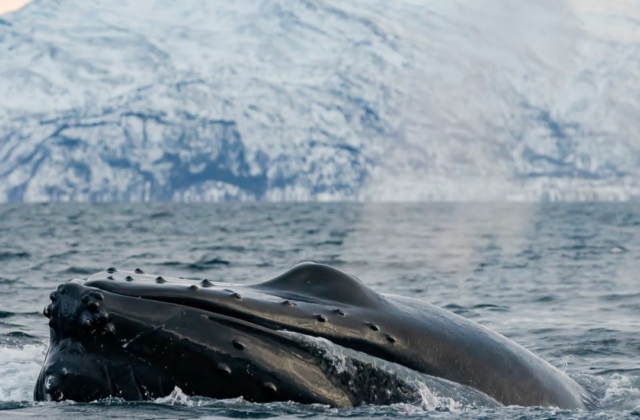
Polarfront · Her story
One ship, two eras, one soul
66° N · 02° E — Station M
“Polarfront is changing eras but remains true to herself.”
Le Marin

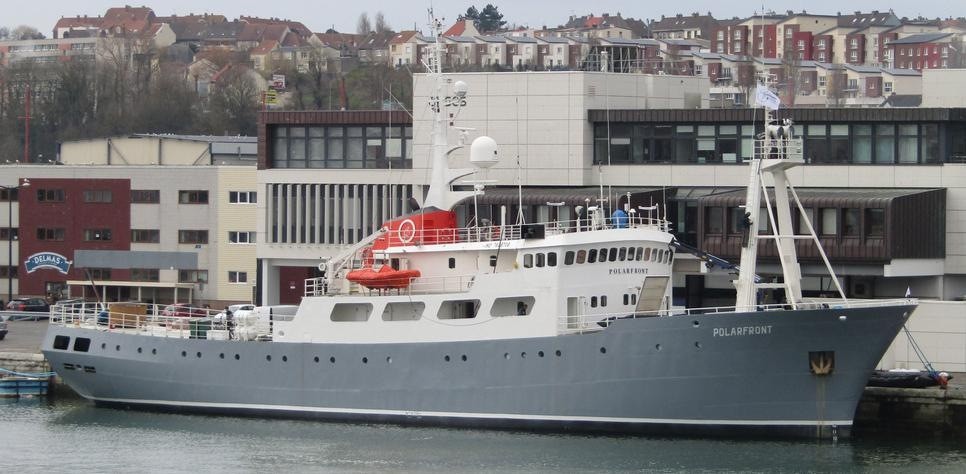
It all began at the shipyards of Mandal, on Norway’s southern coast.
Polarfront’s keel was laid on August 1st, 1975, at Mandal Slip & m.V., and the interior fitting-out was then entrusted to the teams at Fitjar Mekaniske Verksted.
The ship was launched on March 1st, 1976, and delivered on December 14 of the same year. Nearly 1,000 metric tons of steel, assembled to withstand the worst seas of the North Atlantic: a sturdiness that, fifty years later, would earn her a second life instead of the scrapyard.

The name comes from the theory of the polar front, developed in the early 20th century by Norwegian meteorologists. The polar front is the outer limit where polar air meets tropical air: an invisible boundary that governs much of the weather in the temperate latitudes.
Positioned at 66° N, 02° E, some 450 km off the coast of Norway, Polarfront held Station M (“Mike”), the most exposed of a network of 13 weather stations in the North Atlantic. Shared at first with the Dutch ship Cumulus, the watch became hers alone from 1986 on.
Five times a week, temperature and salinity readings were taken down to a depth of 2,500 meters. For ten years, Polarfront also measured CO2 levels on behalf of the National Oceanic and Atmospheric Administration (NOAA), where polar and tropical air masses converge.
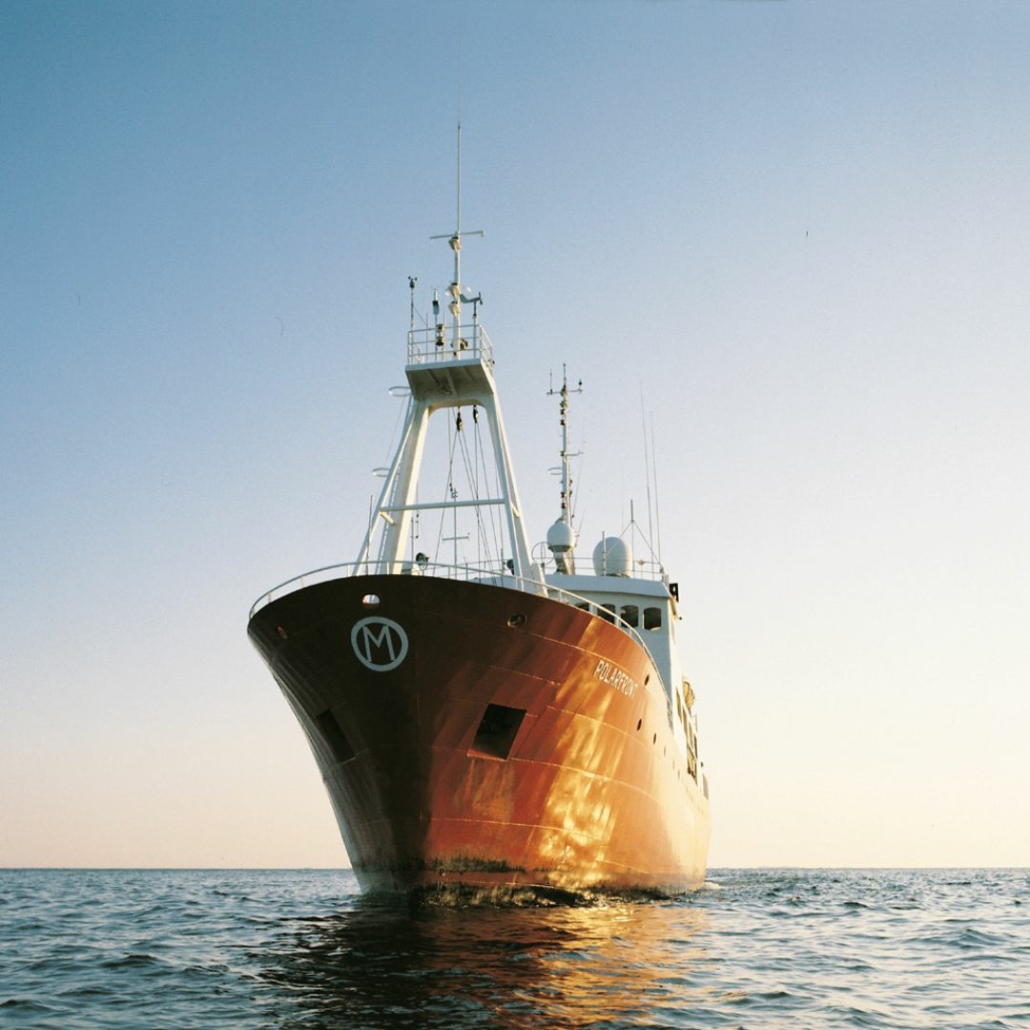
Little by little, weather satellites and automated drifting buoys took over from weather ships around the world.
She was then the last active weather ship in the world: the last representative of a profession born in the early 20th century, vanishing with the advent of satellite observation.
After 34 years on watch, silence fell over Station Mike.
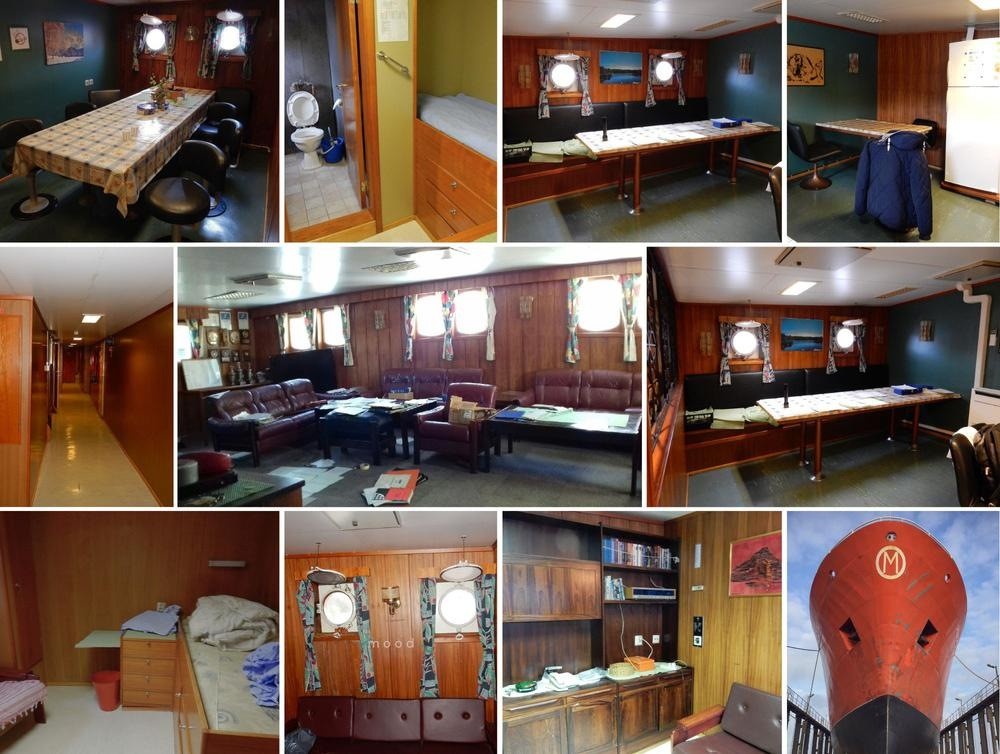
After she was decommissioned, Polarfront could have ended her days at the scrapyard. But surveys of her hull revealed Norwegian steel in excellent condition: too sound to be sacrificed.
In Marseille, the founders of Latitude Blanche, who met as students at France’s national maritime academy (École nationale supérieure maritime), talk about a kind of travel that would reflect who they are. The idea of creating a French company takes root.
Things speed up: people love the project, and clients want to book for summer 2018. But there is still no ship…
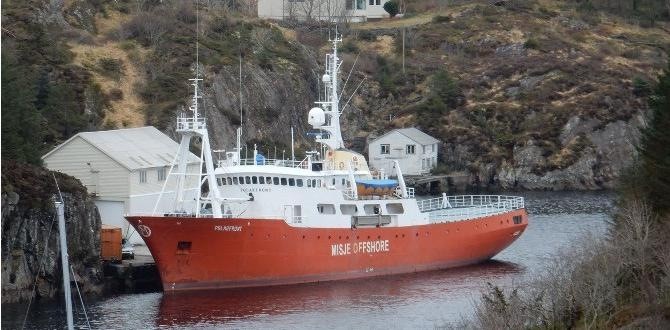
A Norwegian broker introduces Polarfront, moored at Blomvåg, a fjord north of Bergen. A few hours on board inspecting every last space, and it’s confirmed: love at first sight.
Latitude Blanche is born.
Latitude Blanche acquires Polarfront and gives her a second life.
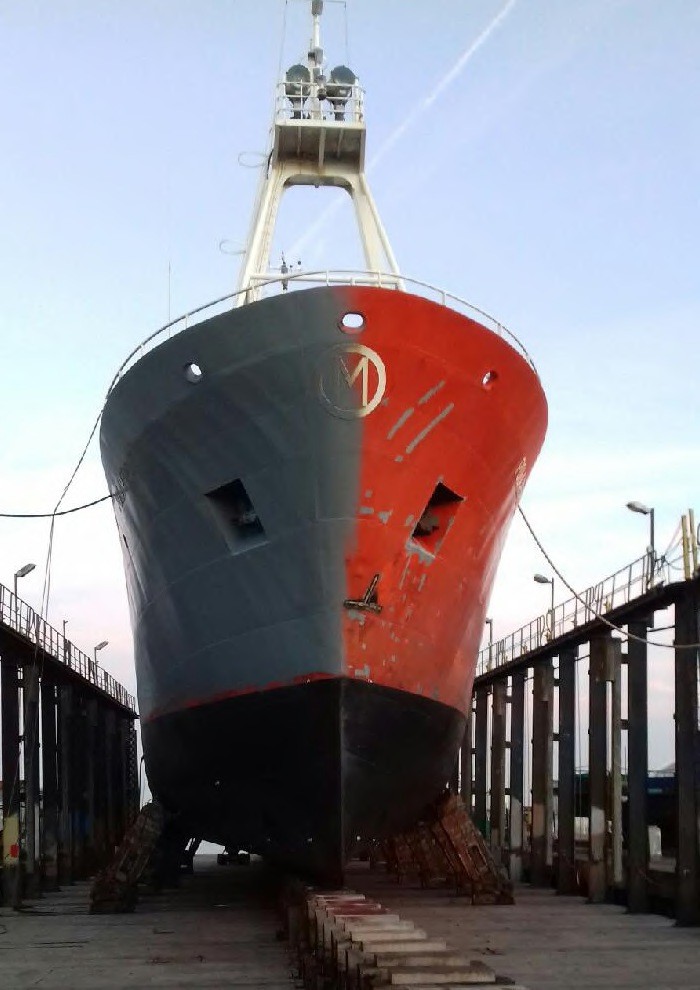
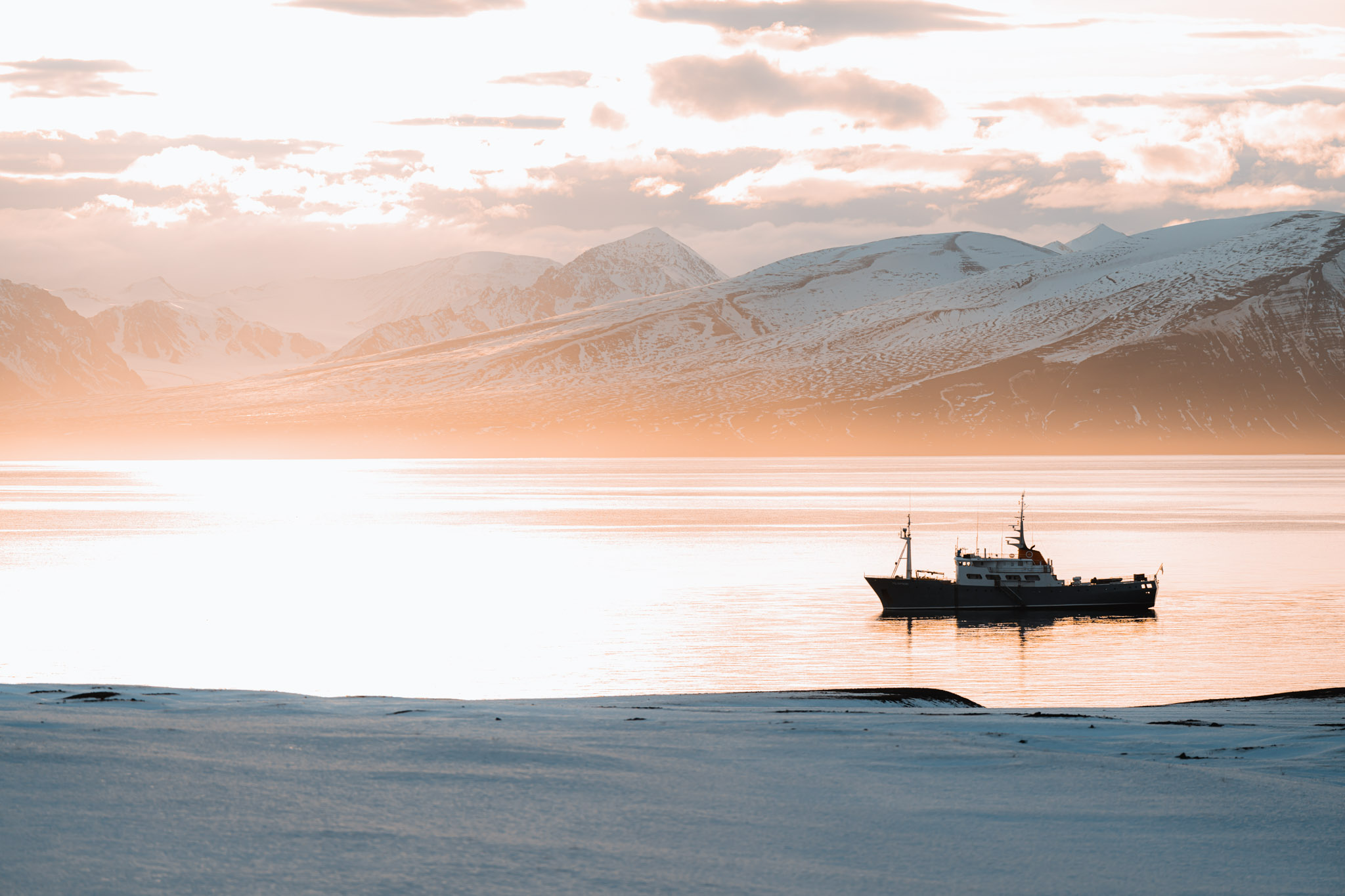
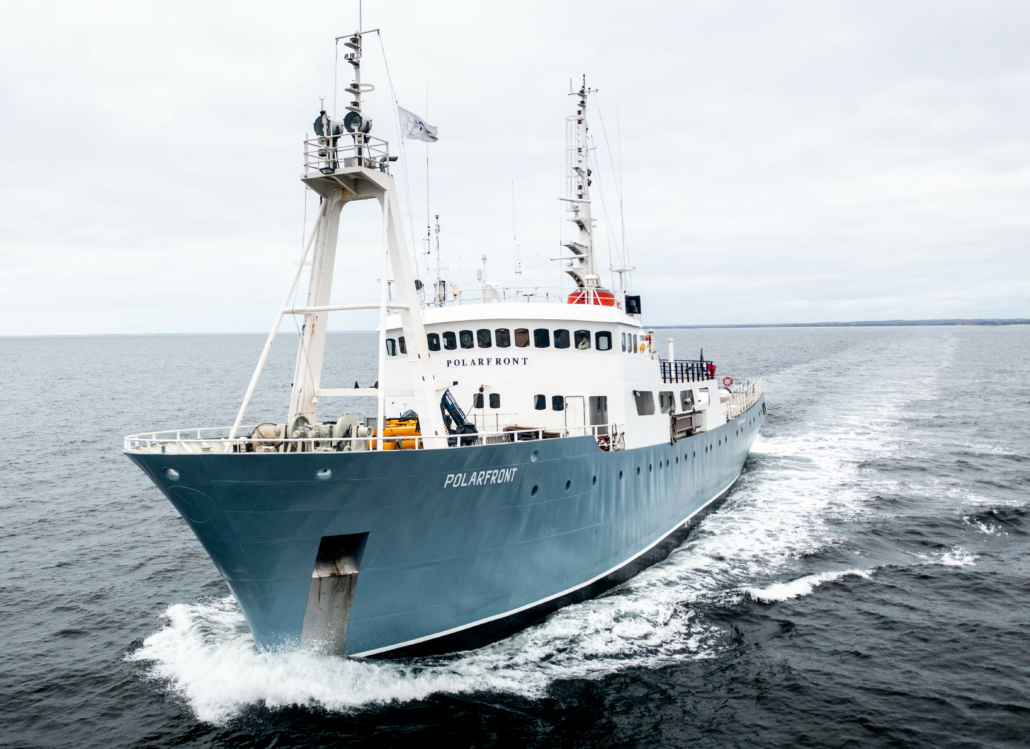
The ship changed flags, was registered in Marseille and traded her scientific mission for exploration: instead of measuring where air masses meet, she would now take travelers there, right up to the ice she once watched from offshore.
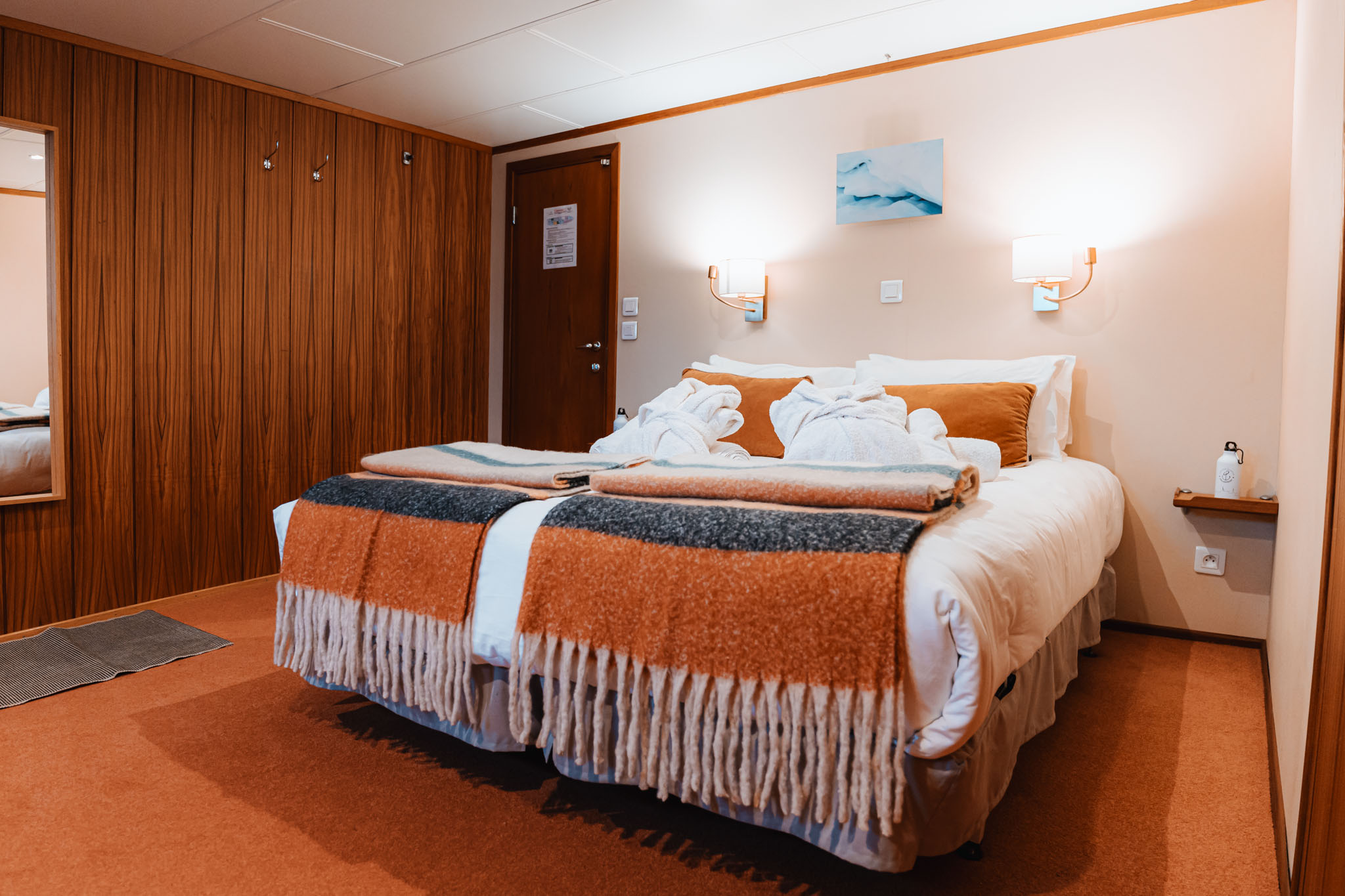
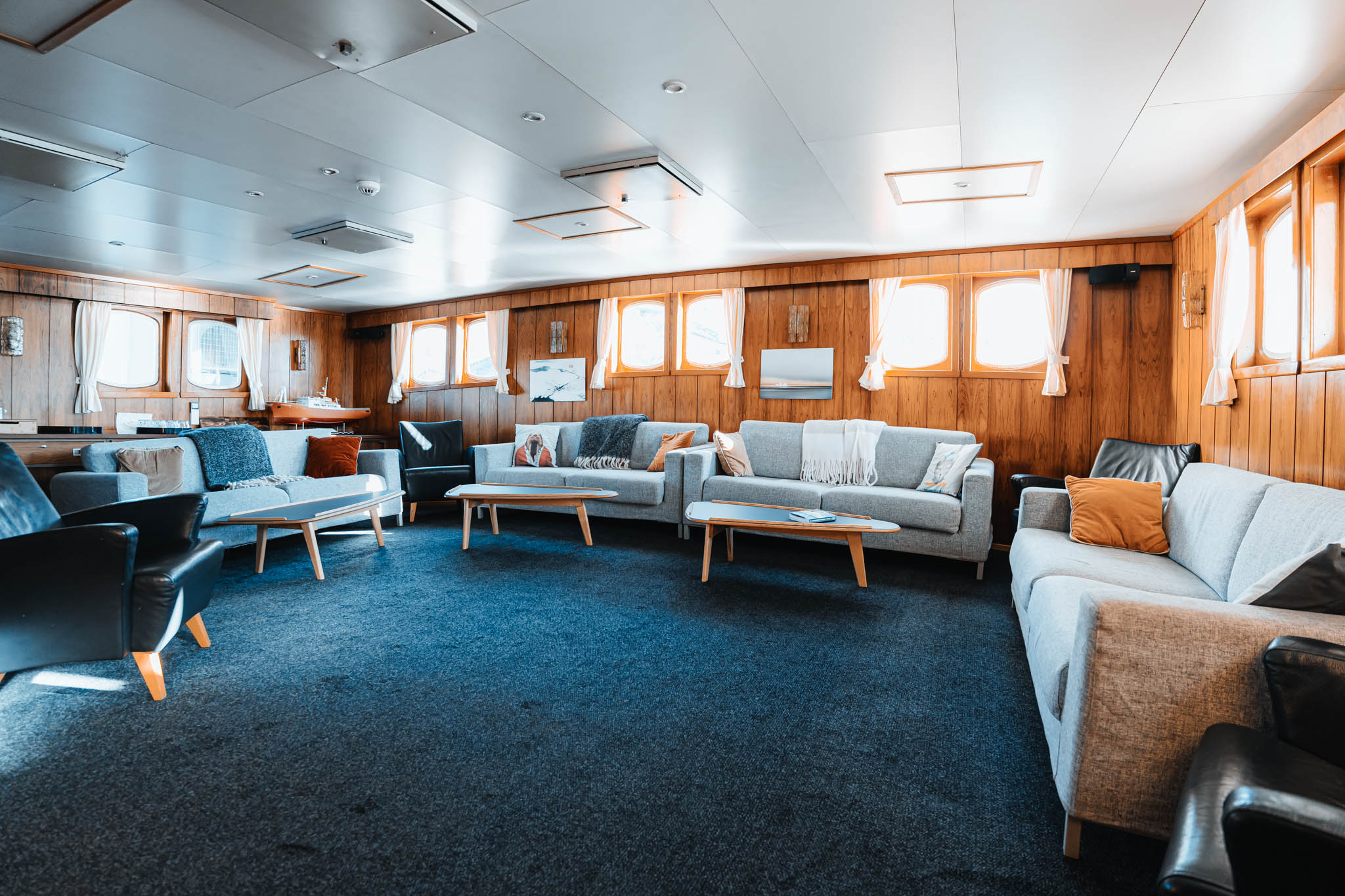
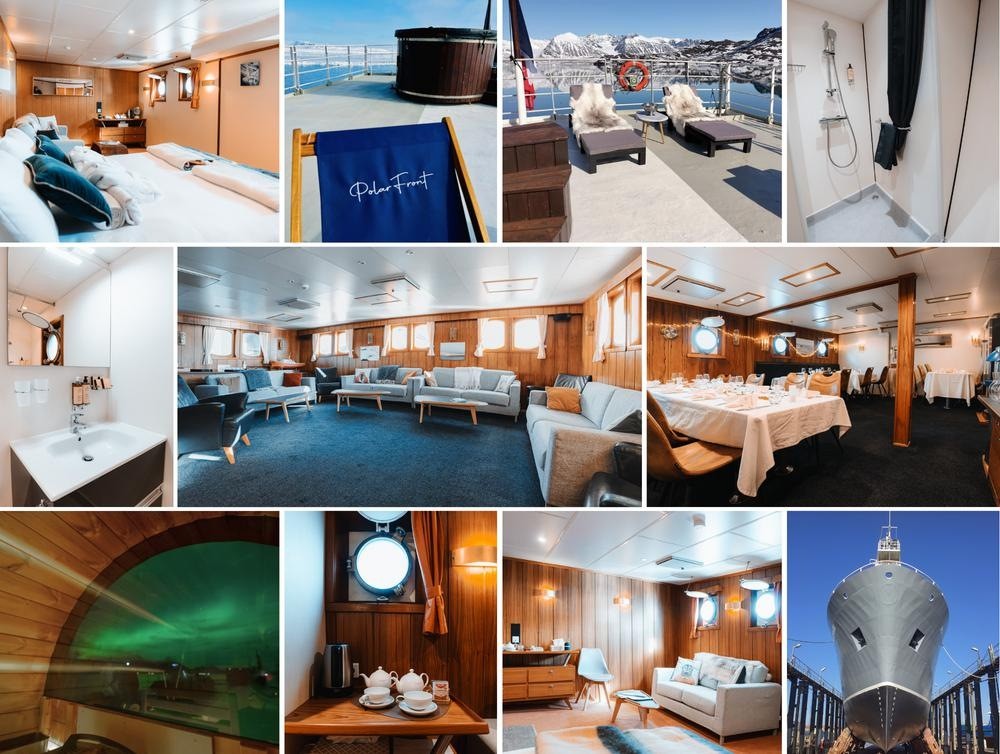
Her interiors were completely redesigned to welcome just twelve guests in a warm, convivial atmosphere: a deliberately small scale that stands apart from the standards of polar tourism.
New flagFrenchHome portMarseille
April 7, 2018The first guests come aboard Polarfront.
Scrapping nearly 1,000 metric tons of steel to build a new ship would have been extremely polluting.
After six years of polar operations, Latitude Blanche knew every corner of Polarfront, and surveys showed her Norwegian steel was still in excellent condition. Rather than replace her, the company chose to reinvent her from propeller to bridge, during four months at the Piriou shipyard in Concarneau: an investment equal to buying two similar ships.
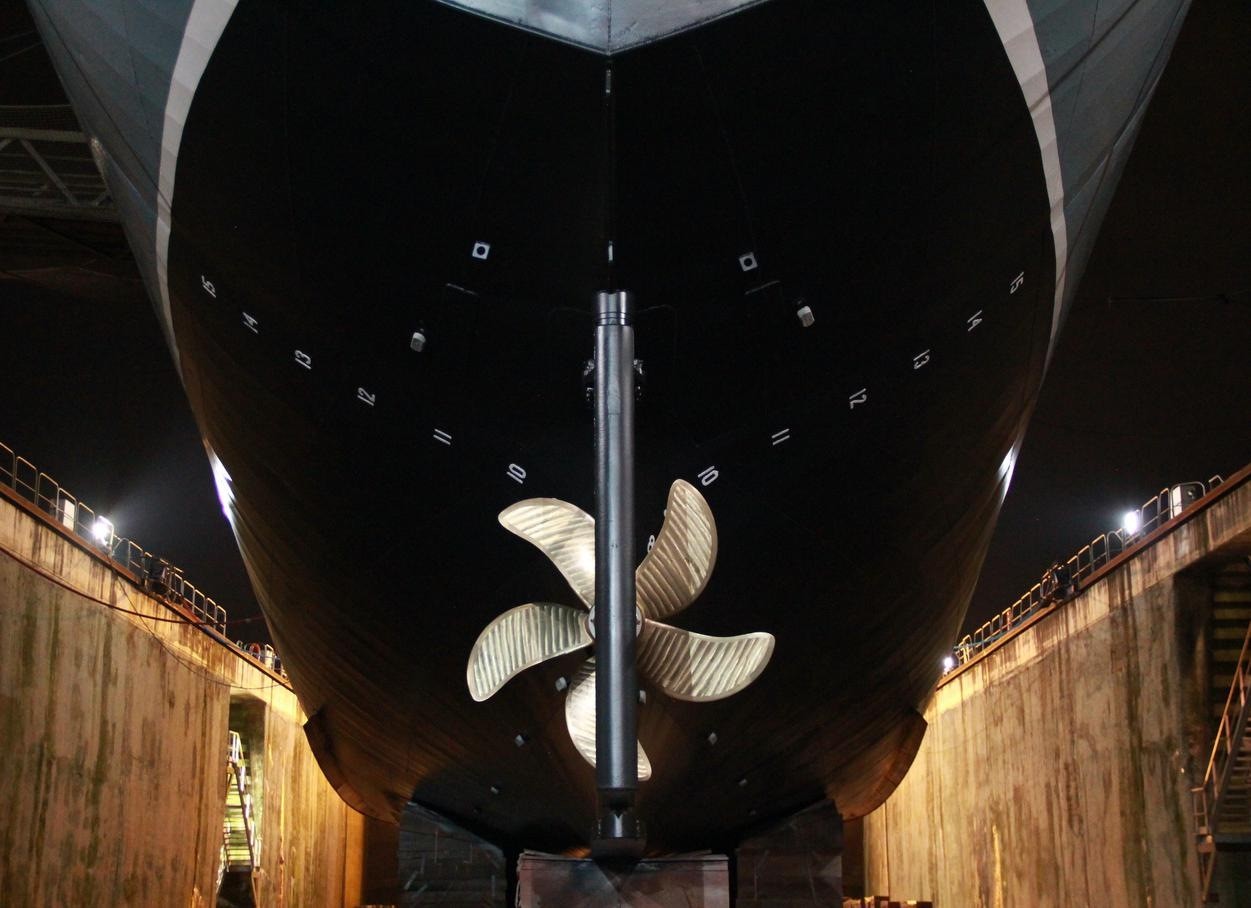
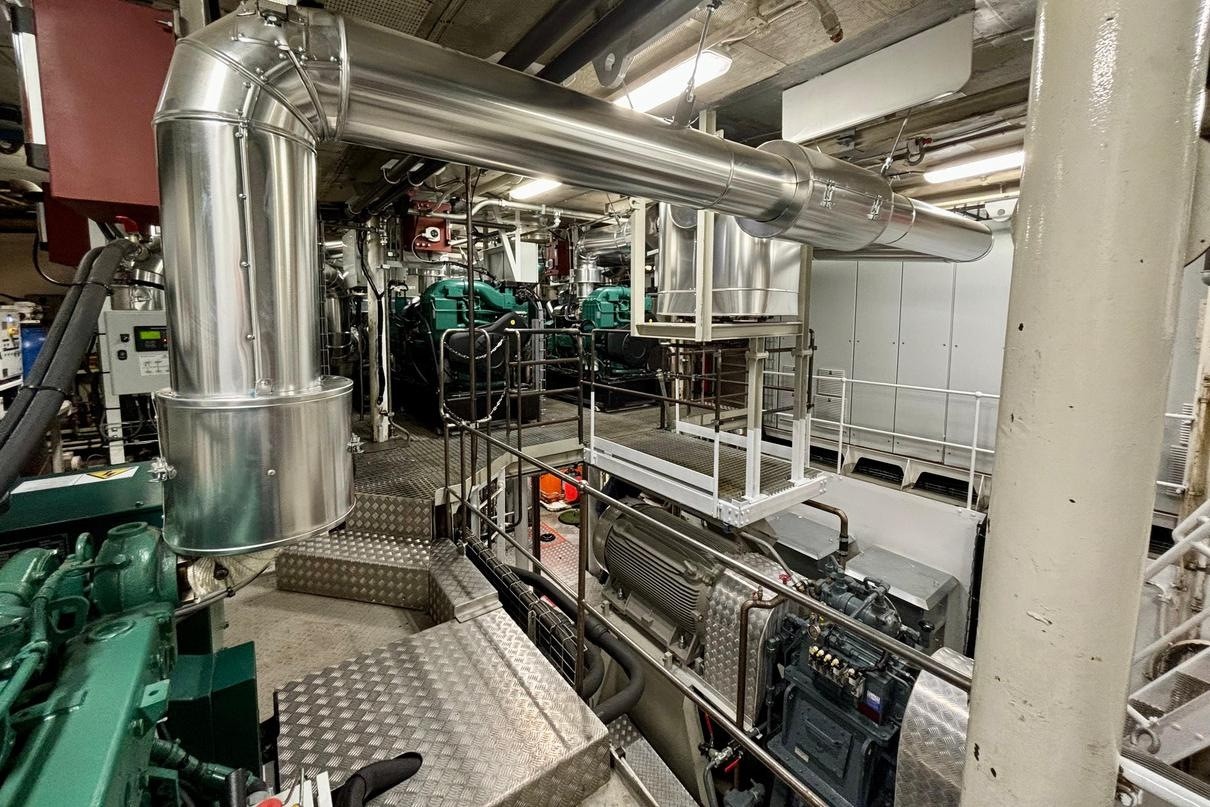
The original engine, a legendary 1,500 hp Wichmann 5AX diesel, made way for electric propulsion with two independent motors. The four-blade controllable-pitch propeller was replaced by a five-blade fixed-pitch propeller, far more efficient and much quieter. Three generator sets with urea injection (AdBlue) eliminate nitrogen oxides; a high-efficiency boiler recovers heat from the engines; and the ship plugs into shore power whenever ports allow. Every system was renewed, without ever touching the original hull.
trees: on average, a tree absorbs 25 kg of CO2 a year; the savings equal what 22,500 trees absorb in one year.
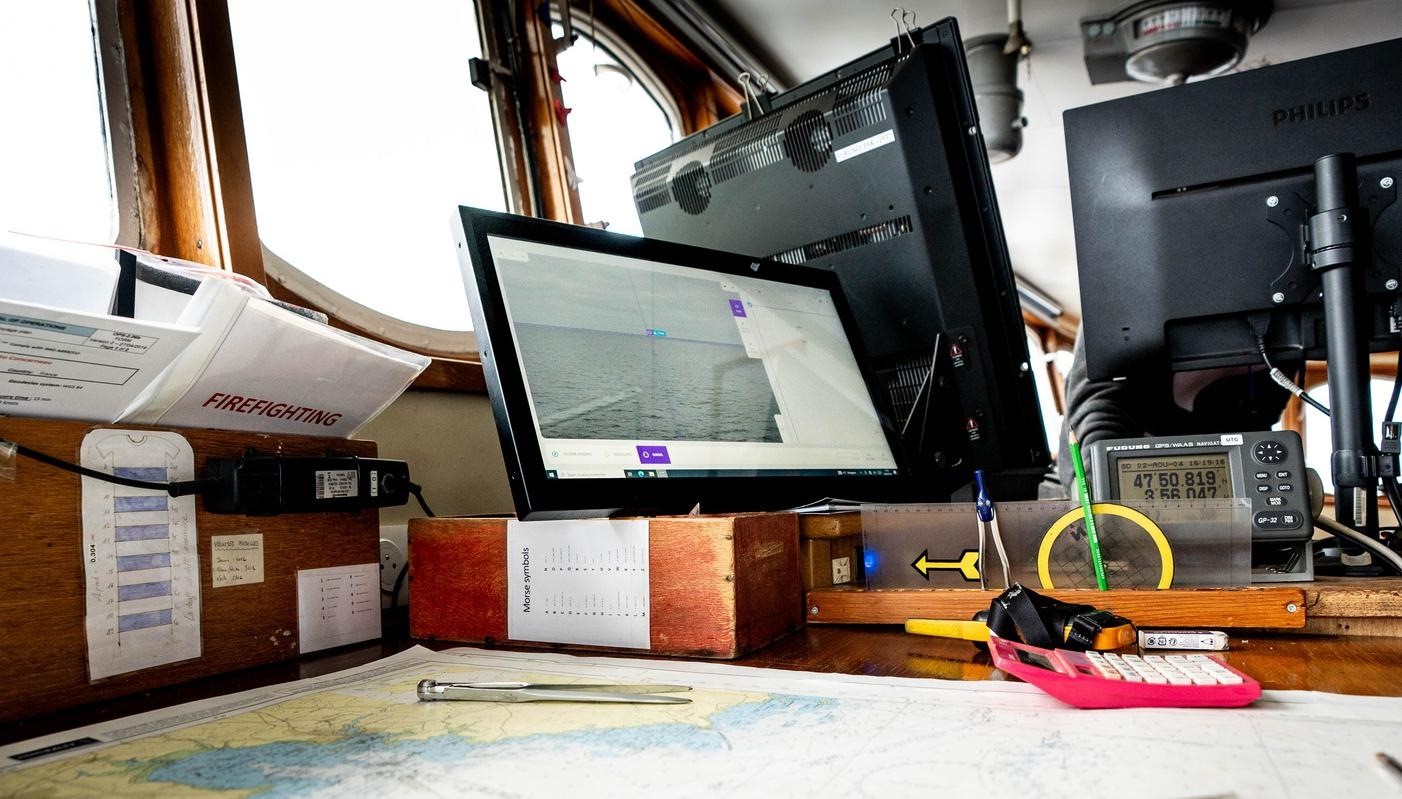
Latitude Blanche chose to carry a weather station on board, in partnership with Météo France. The station automatically transmits data that feed the world’s meteorological databases: they are essential for initializing numerical weather prediction models and are then made available for climate research. On top of these automatic readings, the crew records the observations that sensors cannot collect.
In 2023, a new partnership began with SEA.AI, a company specializing in the automatic detection of floating objects using artificial intelligence: a data-collection campaign on the presence of icebergs and cetaceans has been conducted aboard Polarfront to improve its detection algorithms.
An intimate expedition ship: twelve guests, an ice-strengthened hull, electric propulsion.Each suite has its own identity, blending maritime heritage and contemporary comfort.The Coriolis lounge, our chefs’ table, the polar library, the panoramic sauna and the Nordic bath.
Ship’s biscuits
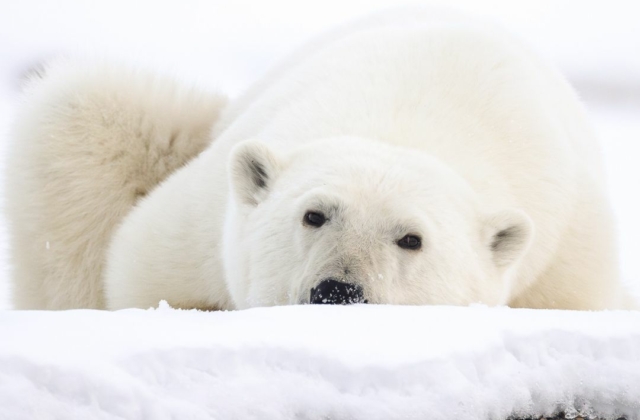
At sea, cookies are called ship’s biscuits, and our polar bear loves them. A few are essential to sail this website; the others, such as YouTube’s for our films, only come on board with your consent.
Ship’s biscuits · Ship’s manifest
Every biscuit is listed on the manifest, and the bear on watch awaits your orders: you decide which ones embark. Your choice is kept for six months and can be changed at any time.
Without them the ship would not float: the website language, form security and remembering your choices. They do nothing else and never follow you around.
| Name | Set by | Purpose | Duration |
|---|---|---|---|
lb_cookies | Latitude Blanche | Remembers your cookie choices | 6 months |
wp-wpml_current_language | Latitude Blanche | Remembers the website language | 1 day |
Our films are hosted by YouTube (Google). Letting them on board means accepting that YouTube sets its cookies when a video is shown. Otherwise they wait on the quay and open on YouTube.
| Name | Set by | Purpose | Duration |
|---|---|---|---|
YSC, VISITOR_INFO1_LIVE… | YouTube (Google) | Plays videos, measures their audience | Up to 6 months |
— | 360player | 360° tours of the ship | Session |