Where does the midnight sun come from?
The polar regions are known for the polar night, an almost unbroken winter night. In summer, on the other hand, the days grow longer and longer. The phenomenon is the same at the North Pole (boreal) and the South Pole (austral). It is called the polar day, or the midnight sun.
In the Northern Hemisphere, the days quickly grow longer from the spring equinox (around March 20) and reach their longest at the summer solstice, on June 21. At that point, regions above the Arctic Circle experience an unbroken day during which the sun shines for 24 hours. The sun sinks toward the horizon in the evening but does not set: after midnight, it slowly climbs back into the sky for a second day without night. This is called the midnight sun. Areas just below the Arctic Circle get a white night (as opposed to a dark night), meaning the sun does set, but only for a few hours, before rising again very early. During this very short night, the sun, although set, does not dip far enough below the horizon for the night to become completely dark. The pale glow is bright enough to read a book without artificial light. The higher the latitude, the longer this summer day lasts: at the pole, it is light for 6 months, then dark for 6 months in winter.
Under cloudy or overcast skies, all you will see is a pale, diffuse, half-twilight glow, but when the sky is clear, the northern atmosphere produces an astonishing light. While the daytime looks much like it does at our latitudes, the light of the evening and of the white night can resemble the light seen during an eclipse, with the sun low on the horizon. It is a kind of sunset that never sets. The explanation lies in the tilt of the Earth’s axis relative to the sun. This axis shifts with the seasons: in summer, the sun lights the Northern Hemisphere more, shining constantly at the pole. In the Southern Hemisphere, where the seasons are reversed, it is completely dark during that time.
White nights can be seen from Iceland and northern Scotland to Scandinavia, the Baltic Sea and Russia (Saint Petersburg). To enjoy the midnight sun, though, you need to reach at least the Arctic Circle. In Europe, it crosses the north of Iceland and Scandinavia (North Cape), then northern Russia (Murmansk): up there, you can truly admire the midnight sun shining 24 hours straight…
Source: National Geographic, Kieran Mulvaney, article published May 25, 2023
Sail to the Far North
aboard Polarfront
Twelve guests, a seasoned crew and passionate guides: the upcoming departures.
8 days / 7 nights Norway · Northern lightsPhoto voyage in Norway 11 of 12 spots Promo from€2,585 20Dec2026 returning Dec 28 Winter
9 days / 8 nights Norway · Northern lightsWinter magic in Norway 7 of 12 spots Promo from€2,975 28Dec2026 returning Jan 5 Winter
9 days / 8 nights Norway · Northern lightsWinter magic in Norway Only 3 spots left from€5,950 28Feb2027 returning Mar 7 Winter
8 days / 7 nights Norway · Northern lightsNorwegian gems in spring 8 of 12 spots from€5,280 16Apr2027 returning Apr 25 Spring
10 days / 9 nights Spitsbergen · WildlifePolar spring in Spitsbergen 12 of 12 spots from€12,490 25Apr2027 returning May 4 Spring
10 days / 9 nights Spitsbergen · WildlifePolar spring in Spitsbergen 5 of 12 spots from€12,490 4Aug2027 returning Aug 13 Summer
10 days / 9 nights Spitsbergen · WildlifeMidnight sun in Svalbard 11 of 12 spots from€12,620 22Aug2027 returning Sep 1 Summer
11 days / 10 nights Greenland · Northern lightsNortheast Greenland National Park Last spot from€13,880 19Sep2027 returning Sep 26 Fall
8 days / 7 nights Spitsbergen · Northern lightsAutumn escape to Svalbard 12 of 12 spots from€9,720 26Sep2027 returning Oct 4 Fall
9 days / 8 nights Spitsbergen · Northern lightsAutumn lights in Svalbard 10 of 12 spots from€11,110 4Oct2027 returning Oct 12 Fall
9 days / 8 nights Spitsbergen · Northern lightsAutumn lights in Svalbard 12 of 12 spots from€11,110 10Dec2027 returning Dec 18 Winter
9 days / 8 nights Norway · Northern lightsWinter magic in Norway 12 of 12 spots from€6,040 18Dec2027 returning Dec 26 Winter
9 days / 8 nights Norway · Northern lightsWinter magic in Norway 12 of 12 spots from€6,220 26Dec2027 returning Jan 3 Winter
9 days / 8 nights Norway · Northern lightsWinter magic in Norway 12 of 12 spots from€6,220
No upcoming departures for this selection.
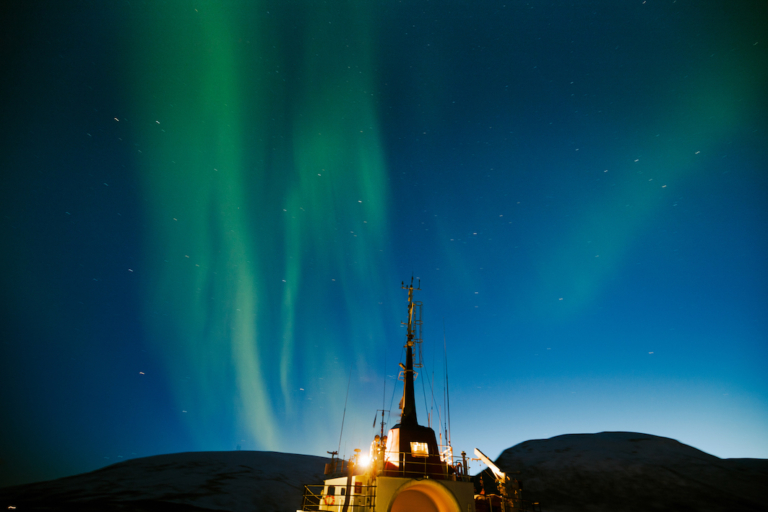
An extremely rare aurora has been observed in Spitsbergen
The phenomenon, never before observed from the Earth’s surface, is thought to be the result of a polar rain of electrons coming straight from the solar corona.
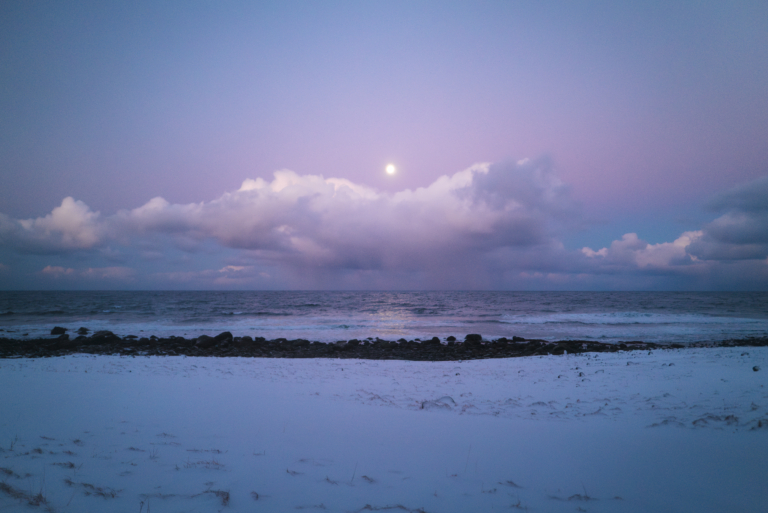
What is life like during the polar night?
People who live in Earth’s icy polar regions experience almost constant night every winter. This phenomenon is called the polar night, but what exactly is it? When does…
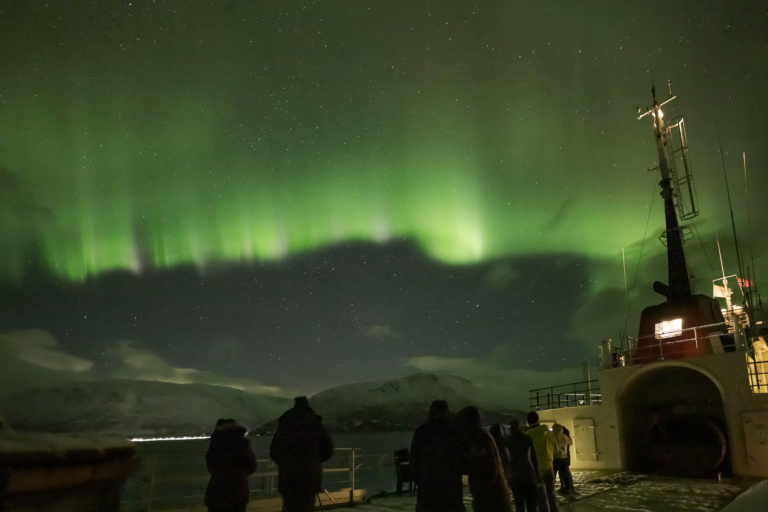
Why do the northern lights come in different colors?
Brilliant green, deep red, purple, pink or even blue… Polar auroras can put on a true light show. Green is by far the most common color, but it…