What is life like during the polar night?
People who live in Earth’s icy polar regions experience almost constant night every winter. This phenomenon is called the polar night, but what exactly is it? When does it happen, and why?
WHEN DOES THE POLAR NIGHT OCCUR?
Simply put, the “polar night” is a period during which the Sun stays below the horizon for more than twenty-four hours. It occurs in winter, north of the Arctic Circle and south of the Antarctic Circle, two circumpolar lines located at 66.6 degrees north and south latitude, respectively. The closer you get to the poles, the longer it lasts. At the North Pole, for example, the Sun sets in mid-September, a few days after the fall equinox, and does not rise again until mid-March, which gives the poles a polar night of 179 days. Farther from the poles, it can last about twenty-four hours, around the winter solstice.
WHAT IS LIFE LIKE UNDER THE POLAR NIGHT?
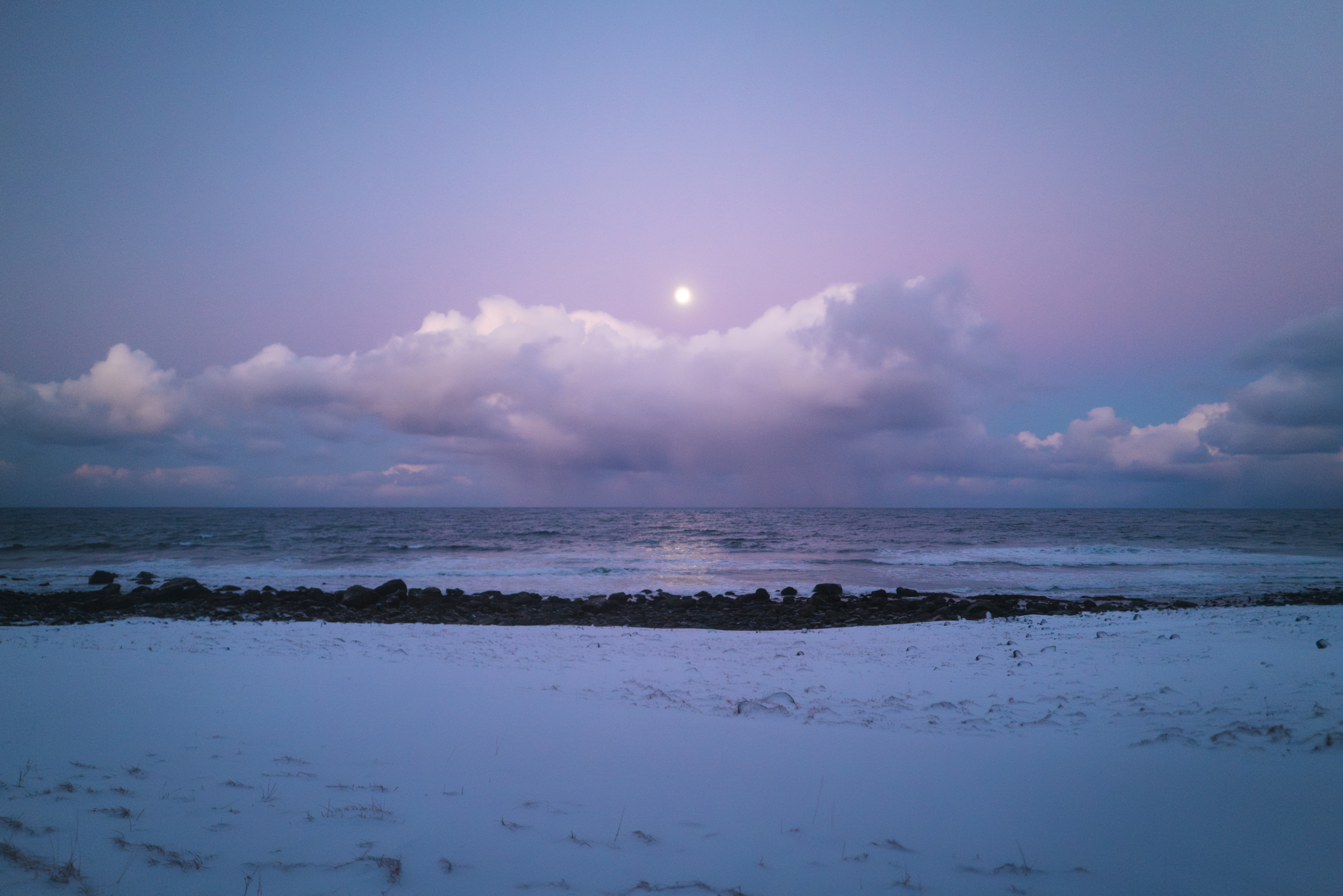
Despite its name, the polar night is not one continuous block of pure darkness. Sunlight is still refracted at the horizon even after the Sun has set. So at many latitudes, most days can be dominated by different phases of “polar twilight.”
As everywhere else on Earth, it is generally lighter in the middle of the day, because the Sun climbs toward the horizon and then sinks away from it without ever crossing it. What is known as “civil twilight” can provide enough light for residents to carry on with their outdoor activities, while “astronomical twilight” is so dark that the only natural lights are the stars, the Moon and the northern lights dancing and shimmering in a clear sky.
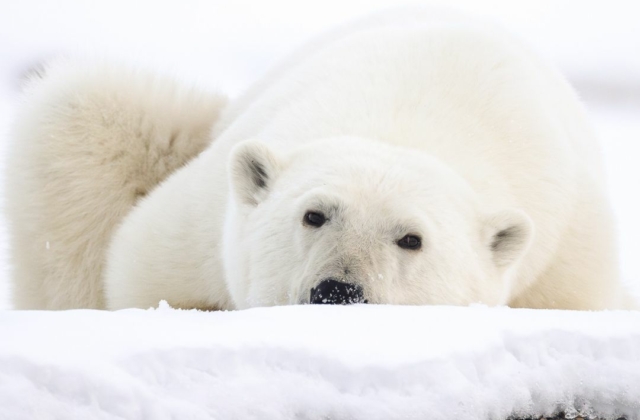
On land, lemmings and voles burrow deep into the snowpack to feed on the previous year’s seeds, while Arctic ground squirrels hibernate and polar bears may even hole up in dens in the depths of winter for shelter. Many animals adapt their daily rhythm, feeding and sleeping in very short bouts throughout the day to save energy.
Reindeer eyes glow blue in winter, thanks to an adaptation that makes it easier for them to find the lichen they feed on during the dark months. In the sea, zooplankton continue their daily migration from deep water to the surface, following the light of the Moon.
Source: National Geographic, Kieran Mulvaney, article published February 5, 2024
Sail to the Far North
aboard Polarfront
Twelve guests, a seasoned crew and passionate guides: the upcoming departures.
8 days / 7 nights Norway · Northern lightsPhoto voyage in Norway 11 of 12 spots Promo from€2,585 20Dec2026 returning Dec 28 Winter
9 days / 8 nights Norway · Northern lightsWinter magic in Norway 7 of 12 spots Promo from€2,975 28Dec2026 returning Jan 5 Winter
9 days / 8 nights Norway · Northern lightsWinter magic in Norway Only 3 spots left from€5,950 28Feb2027 returning Mar 7 Winter
8 days / 7 nights Norway · Northern lightsNorwegian gems in spring 8 of 12 spots from€5,280 16Apr2027 returning Apr 25 Spring
10 days / 9 nights Spitsbergen · WildlifePolar spring in Spitsbergen 12 of 12 spots from€12,490 25Apr2027 returning May 4 Spring
10 days / 9 nights Spitsbergen · WildlifePolar spring in Spitsbergen 5 of 12 spots from€12,490 4Aug2027 returning Aug 13 Summer
10 days / 9 nights Spitsbergen · WildlifeMidnight sun in Svalbard 11 of 12 spots from€12,620 22Aug2027 returning Sep 1 Summer
11 days / 10 nights Greenland · Northern lightsNortheast Greenland National Park Last spot from€13,880 19Sep2027 returning Sep 26 Fall
8 days / 7 nights Spitsbergen · Northern lightsAutumn escape to Svalbard 12 of 12 spots from€9,720 26Sep2027 returning Oct 4 Fall
9 days / 8 nights Spitsbergen · Northern lightsAutumn lights in Svalbard 10 of 12 spots from€11,110 4Oct2027 returning Oct 12 Fall
9 days / 8 nights Spitsbergen · Northern lightsAutumn lights in Svalbard 12 of 12 spots from€11,110 10Dec2027 returning Dec 18 Winter
9 days / 8 nights Norway · Northern lightsWinter magic in Norway 12 of 12 spots from€6,040 18Dec2027 returning Dec 26 Winter
9 days / 8 nights Norway · Northern lightsWinter magic in Norway 12 of 12 spots from€6,220 26Dec2027 returning Jan 3 Winter
9 days / 8 nights Norway · Northern lightsWinter magic in Norway 12 of 12 spots from€6,220
No upcoming departures for this selection.
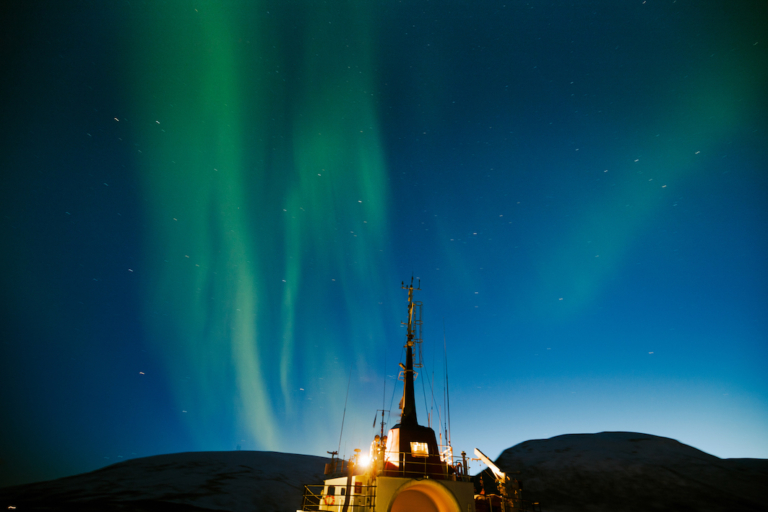
An extremely rare aurora has been observed in Spitsbergen
The phenomenon, never before observed from the Earth’s surface, is thought to be the result of a polar rain of electrons coming straight from the solar corona.
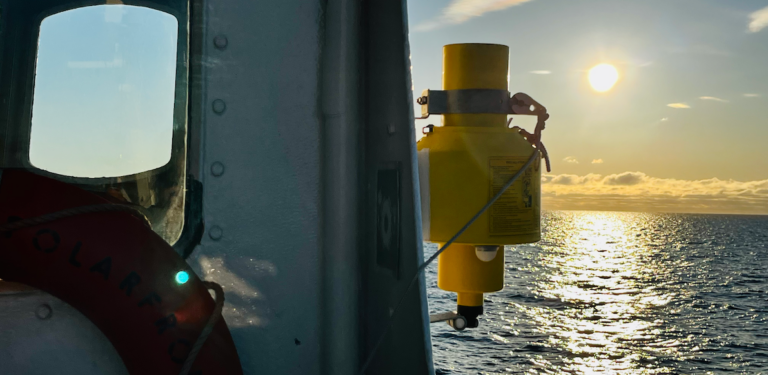
Where does the midnight sun come from?
The polar regions are known for the polar night, an almost unbroken winter night. In summer, on the other hand, the days grow longer and longer. The phenomenon…
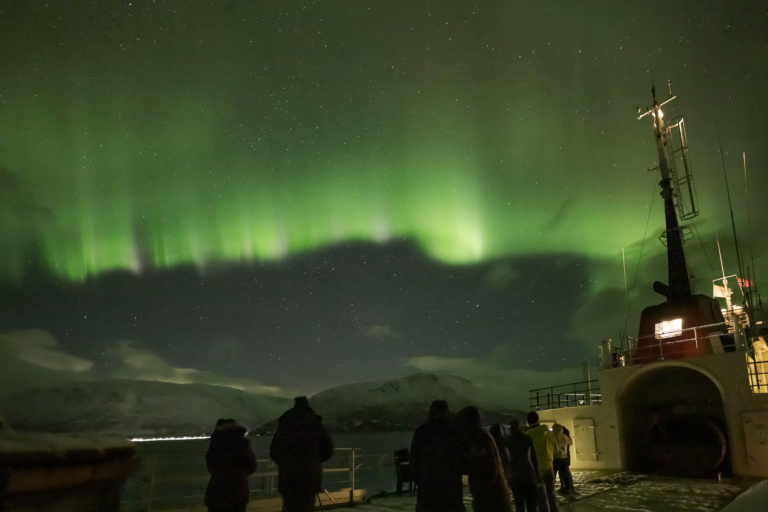
Why do the northern lights come in different colors?
Brilliant green, deep red, purple, pink or even blue… Polar auroras can put on a true light show. Green is by far the most common color, but it…