Why do humpback whales come to the defense of other species?
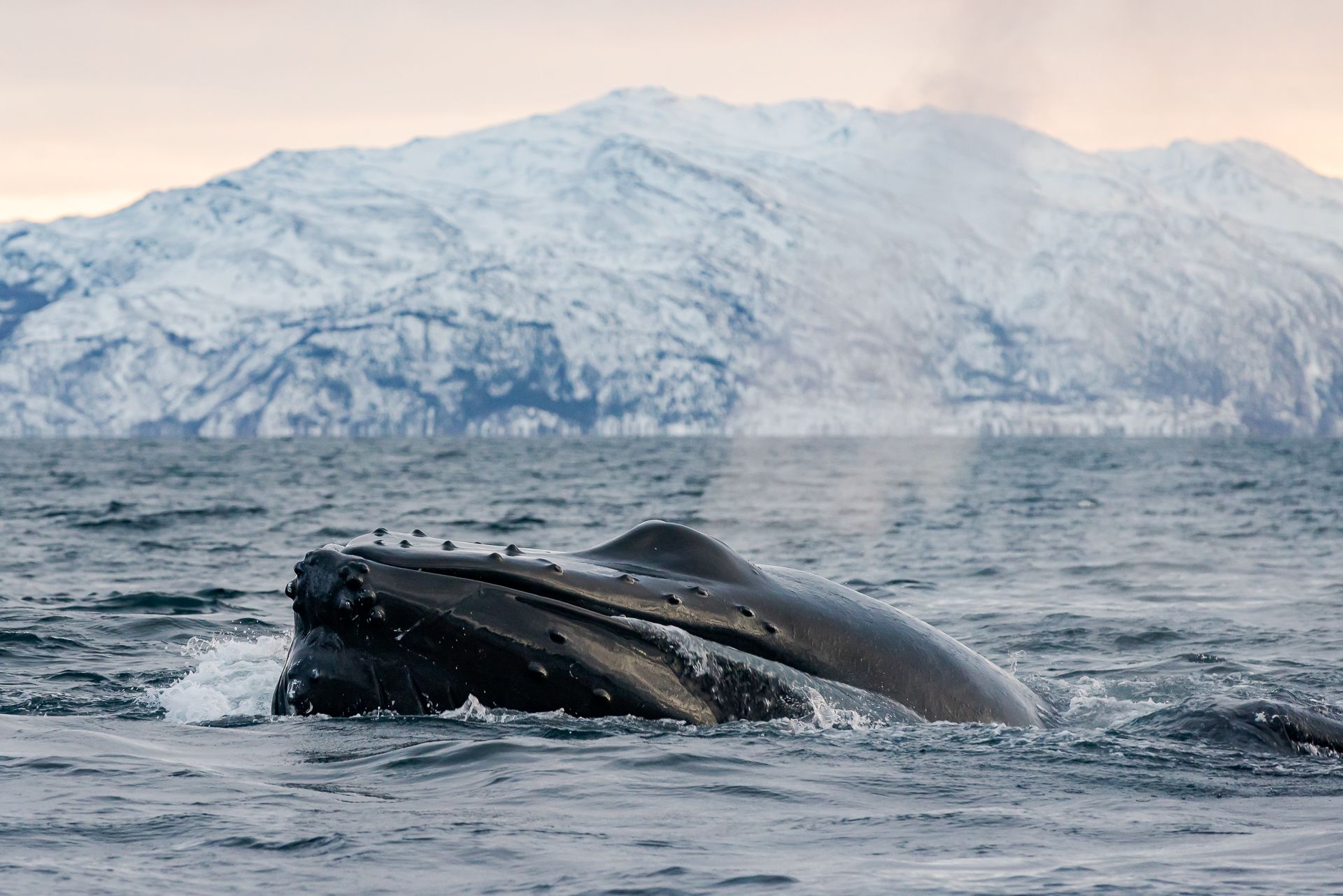
Picture the scene. A seal is desperately trying to escape a pod of orcas in the middle of a hunt. Suddenly, a huge humpback whale surges up, places itself between the predators and their prey, slams the surface of the water with its flippers and chases the orcas until they flee.
It sounds like something out of an animated film… And yet it has happened many times in the world’s oceans.
For several decades, scientists have been reporting astonishing sightings of humpback whales stepping in to break up orca attacks. More surprising still, the animals they rescue aren’t always… whales.
So why do these giants of the sea take such risks to defend other species?
Interventions seen all over the world
Intrigued by this unusual behavior, biologist Robert Pitman of NOAA Fisheries in California and his team compiled 115 observations of encounters between humpback whales and orcas, reported between 1951 and 2012.
Their findings, published in the journal Marine Mammal Science, are fascinating.
In more than half of the cases, it was the humpbacks that took the initiative and approached the orcas.
Even more surprising, 87% of these interventions took place while the orcas were hunting or eating prey.
But that prey turned out to be a whale in only a minority of cases.
Humpback whales have also been seen defending seals, sea lions, porpoises, other cetacean species… and sometimes even fish.
An impressive intimidation strategy
When facing orcas, humpback whales don’t always attack.
Above all, they use their enormous size to intimidate their opponents.
They swim rapidly toward the orca pod, let out powerful vocalizations, slap the surface with their long pectoral fins or their tail, and physically place themselves between the predators and their victim.
Some confrontations can last several hours.
This show of force is often enough to discourage the orcas, which would rather give up the hunt.
As Robert Pitman points out, an adult whale is a formidable opponent.
“One blow from a tail or a flipper could be fatal to an orca. When a whale charges at them, they generally prefer to get out of the way.”
That short delay is sometimes all the prey needs to escape.
Are whales altruistic?
At first glance, this behavior looks like a genuine act of altruism.
Why spend so much energy saving a seal or a sea lion you will probably never see again?
In animals, this kind of behavior has long intrigued biologists.
The theory of evolution holds that individuals generally tend to adopt behaviors that favor their own survival or that of their offspring.
As Robert Pitman puts it:
“An altruistic individual seems to give more than it receives. That is precisely what makes altruism such a puzzle.”
So could whales really help other species without expecting anything in return?
Researchers believe the reality is more subtle.
A strategy to protect their calves
The most convincing explanation lies in the evolutionary history of humpback whales.
Orcas are one of the few natural predators capable of attacking their young.
Adults, which can exceed fifteen meters in length and weigh several dozen tons, run little risk of being killed. Calves, on the other hand, are far more vulnerable.
Over the course of evolution, the whales are thought to have developed a very powerful reflex: stepping in as soon as they detect an orca attack.
This behavior would have been favored by natural selection, because females that defended their calves effectively were more likely to pass their genes on to the next generations.
Scientists call this kin selection.
In other words, protecting the young of one’s own species is a major evolutionary advantage.
An instinct that sometimes overshoots its target
But how can we explain why whales also defend seals or sea lions?
Researchers have put forward a particularly interesting hypothesis.
Whales may not always take the time to identify exactly who the orcas are attacking.
They may be reacting first and foremost to the signals of a hunt: vocalizations, commotion, rapid movements or distress calls.
Their instinct would therefore be to disrupt any orca attack, without necessarily telling whether the target is a calf… or a seal.
When the victim belongs to another species, its rescue would ultimately be just a side effect of a behavior originally selected to protect young whales.
Orcas: predators… but also key players in the oceans
These observations shouldn’t lead us to see orcas as the “villains” of the oceans.
They are apex predators, essential to the healthy functioning of marine ecosystems.
By regulating populations of seals, fish and cetaceans, they help maintain the natural balance of the oceans.
Clashes between orcas and whales are therefore an integral part of marine life, and they reflect the complexity of the interactions between species.
The oceans never cease to surprise us
Each new study reveals just how elaborate the social behavior of whales is.
Their ability to cooperate, to protect their young and sometimes even to rescue other animals continues to fascinate researchers.
Is it altruism, an instinct shaped by evolution, or a mix of both? The question remains open.
One thing is certain: these ocean giants are far more than impressive marine mammals. Their intelligence, their social lives and their complex behaviors remind us that the oceans still hold many mysteries… and that we still have a great deal to learn from the creatures that live there.Sail to the Far North
aboard Polarfront
Twelve guests, a seasoned crew and passionate guides: the upcoming departures.
8 days / 7 nights Norway · Northern lightsPhoto voyage in Norway 11 of 12 spots Promo from€2,585 20Dec2026 returning Dec 28 Winter
9 days / 8 nights Norway · Northern lightsWinter magic in Norway 7 of 12 spots Promo from€2,975 28Dec2026 returning Jan 5 Winter
9 days / 8 nights Norway · Northern lightsWinter magic in Norway Only 3 spots left from€5,950 28Feb2027 returning Mar 7 Winter
8 days / 7 nights Norway · Northern lightsNorwegian gems in spring 8 of 12 spots from€5,280 16Apr2027 returning Apr 25 Spring
10 days / 9 nights Spitsbergen · WildlifePolar spring in Spitsbergen 12 of 12 spots from€12,490 25Apr2027 returning May 4 Spring
10 days / 9 nights Spitsbergen · WildlifePolar spring in Spitsbergen 5 of 12 spots from€12,490 4Aug2027 returning Aug 13 Summer
10 days / 9 nights Spitsbergen · WildlifeMidnight sun in Svalbard 11 of 12 spots from€12,620 22Aug2027 returning Sep 1 Summer
11 days / 10 nights Greenland · Northern lightsNortheast Greenland National Park Last spot from€13,880 19Sep2027 returning Sep 26 Fall
8 days / 7 nights Spitsbergen · Northern lightsAutumn escape to Svalbard 12 of 12 spots from€9,720 26Sep2027 returning Oct 4 Fall
9 days / 8 nights Spitsbergen · Northern lightsAutumn lights in Svalbard 10 of 12 spots from€11,110 4Oct2027 returning Oct 12 Fall
9 days / 8 nights Spitsbergen · Northern lightsAutumn lights in Svalbard 12 of 12 spots from€11,110 10Dec2027 returning Dec 18 Winter
9 days / 8 nights Norway · Northern lightsWinter magic in Norway 12 of 12 spots from€6,040 18Dec2027 returning Dec 26 Winter
9 days / 8 nights Norway · Northern lightsWinter magic in Norway 12 of 12 spots from€6,220 26Dec2027 returning Jan 3 Winter
9 days / 8 nights Norway · Northern lightsWinter magic in Norway 12 of 12 spots from€6,220
No upcoming departures for this selection.
Polar bears in Spitsbergen: where and when to see them
Seeing a polar bear in the wild is the dream of many travelers heading to Spitsbergen. The archipelago is one of the best places in the world to…
10 sounds of the Arctic you will never forget
Traveling in the polar regions means learning to slow down and pay attention to details we often overlook in everyday life. In these places, where the absence of…
Arctic fox: how does it survive in one of the most hostile environments on the planet?
In the white vastness of the Arctic, a discreet silhouette sometimes crosses the snow-covered tundra. Fast, agile and perfectly camouflaged, the Arctic fox (Vulpes lagopus) is one of…