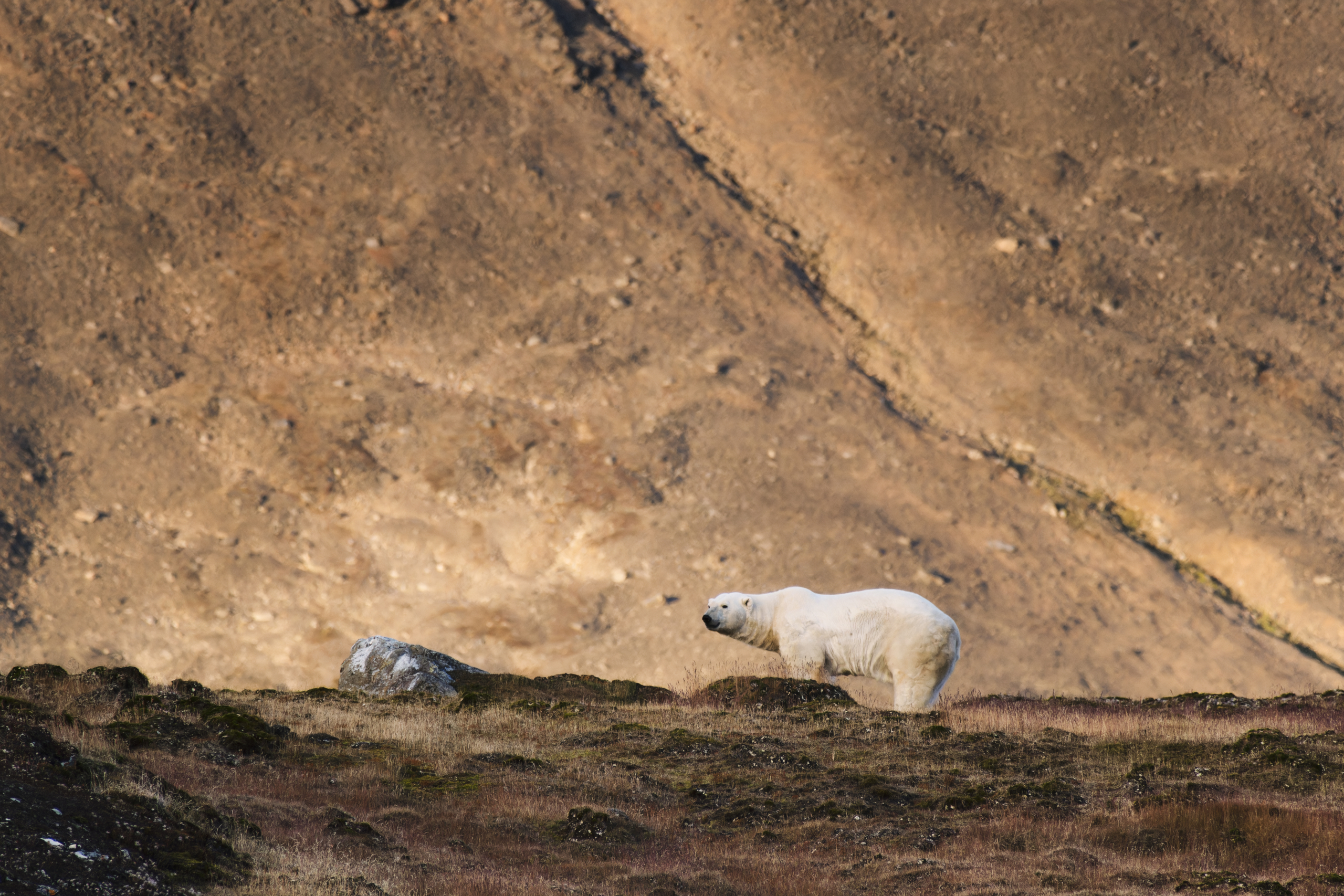
Polar bears in Spitsbergen: where and when to see them
Seeing a polar bear in the wild is the dream of many travelers heading to Spitsbergen. The archipelago is one of the best places in the world to see one, but an encounter cannot be ordered: here is what you need to know to give yourself the best chance, while respecting the animal.
The king of the Arctic in a few numbers
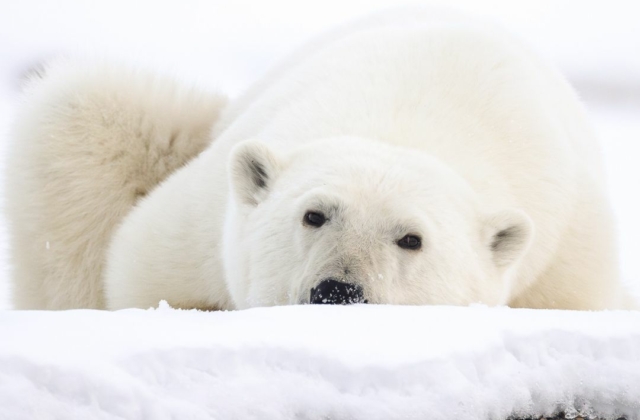
The polar bear is the largest land carnivore. An adult male usually weighs 350 to 600 kg and can be more than 2.5 meters long; females are about half as heavy. Thick fur and a layer of fat several centimeters deep protect it from the cold; under its fur, its skin is black.
During the last major survey, in August 2015, researchers estimated that about 260 bears lived in Svalbard itself, and nearly 1,000 including the sea ice north of the archipelago. The Barents Sea population, shared by Norway and Russia, numbers about 3,000 bears. In Svalbard, the species has been fully protected since 1973.
A hunter that lives on the sea ice
The polar bear feeds mainly on seals, especially ringed seals and bearded seals, which it waits for at breathing holes or surprises on the ice. The sea ice is its hunting ground: that is why it is most often found where the sea ice meets the coast, or along the edge of the drifting pack ice.
It is also an excellent swimmer, able to spend long hours in the water between ice floes. Contrary to a common belief, it does not hibernate: only pregnant females spend the winter in a den, where the cubs are born. We tell you all about it in our article “The polar bear does not hibernate”.
When to go to see polar bears?
In spring, in April and May, the sea ice still lines the coasts and some fjords: bears hunt actively near the shore, and mothers come out with the cubs born during the winter. This is the season of our voyage Polar spring in Spitsbergen.
In summer, the ice retreats north and east, and bears follow it or stay ashore until the ice returns. In August, our voyage Midnight sun in Svalbard pushes on to Nordaustlandet and the edge of the pack ice, where there is a good chance of spotting one. In the fall, sightings are rarer. No encounter can be guaranteed: nature decides. To compare the seasons, see our guide When to go to Spitsbergen.
Watching from a safe distance
Since 2025, Svalbard regulations require you to stay at least 300 meters from a polar bear, and 500 meters from March 1 to June 30. These distances protect the animals, especially mothers and their cubs, and also keep everyone safe. All the details are in our article on Svalbard’s regulations.
When a bear is spotted from Polarfront, we watch it from the deck, in silence, for as long as it takes. With only 12 guests, everyone finds a spot at the rail. Ashore, our guides check each site before landing and carry the deterrents required by law in Svalbard.
Getting ready
A good pair of binoculars (8x42 or 10x42) is essential: at 300 meters, they are what will bring the encounter to life. For photography, a 300 to 600 mm telephoto lens allows beautiful portraits; a teleconverter can help in spring, when the minimum distance rises to 500 meters.
Above all, be patient. Spitsbergen has many other encounters in store: walruses, Svalbard reindeer, Arctic foxes, seals and seabirds by the thousands. Every voyage is different, and that is what makes it magical.
DREAMING OF SEEING A POLAR BEAR?
Sail to Spitsbergen
aboard Polarfront
Twelve guests, a seasoned crew and passionate guides: the upcoming departures.
10 days / 9 nights Spitsbergen · WildlifePolar spring in Spitsbergen 12 of 12 spots from€12,490 25Apr2027 returning May 4 Spring
10 days / 9 nights Spitsbergen · WildlifePolar spring in Spitsbergen 5 of 12 spots from€12,490 4Aug2027 returning Aug 13 Summer
10 days / 9 nights Spitsbergen · WildlifeMidnight sun in Svalbard 11 of 12 spots from€12,620 19Sep2027 returning Sep 26 Fall
8 days / 7 nights Spitsbergen · Northern lightsAutumn escape to Svalbard 12 of 12 spots from€9,720 26Sep2027 returning Oct 4 Fall
9 days / 8 nights Spitsbergen · Northern lightsAutumn lights in Svalbard 10 of 12 spots from€11,110 4Oct2027 returning Oct 12 Fall
9 days / 8 nights Spitsbergen · Northern lightsAutumn lights in Svalbard 12 of 12 spots from€11,110
No upcoming departures for this selection.
10 sounds of the Arctic you will never forget
Traveling in the polar regions means learning to slow down and pay attention to details we often overlook in everyday life. In these places, where the absence of…
Arctic fox: how does it survive in one of the most hostile environments on the planet?
In the white vastness of the Arctic, a discreet silhouette sometimes crosses the snow-covered tundra. Fast, agile and perfectly camouflaged, the Arctic fox (Vulpes lagopus) is one of…
Could whales one day talk to us?
Humankind has always dreamed of communicating with the other species we share our planet with. Understanding birdsong, interpreting the signals of primates or decoding the sounds of the…