We are in a particularly intense period for the northern lights
The Sun’s new cycle of activity, the 25th, is one of the most intense ever recorded since solar cycles were first documented in the 18th century.
A solar cycle is a period of about 11 years during which the Sun’s activity varies between a maximum and a minimum. The activity of these cycles is driven on the one hand by magnetic fields, caused by the Sun’s rotation, and on the other by sunspots on the Sun’s surface. Every 11 years, the Sun’s magnetic field “resets”: it returns to a smoother state and the sunspots almost completely disappear. The length of solar cycles is determined by the convection of solar material moving through the star’s different layers.
In September 2020, NASA officially announced that the Sun had begun its 25th 11-year solar cycle, after an activity minimum in December 2019. The cycle is expected to reach its peak in July 2025.
The intensity of a solar cycle is measured by the number of sunspots that appear on the surface: the higher the number, the more sustained solar activity is considered to be.
Solar cycle 24 (which began in 2008 and ended in 2019), for example, peaked at 116 sunspots. According to a study published in the journal Solar Physics, solar cycle 25 could reach between 210 and 260 sunspots, which would make the current cycle one of the strongest ever recorded.
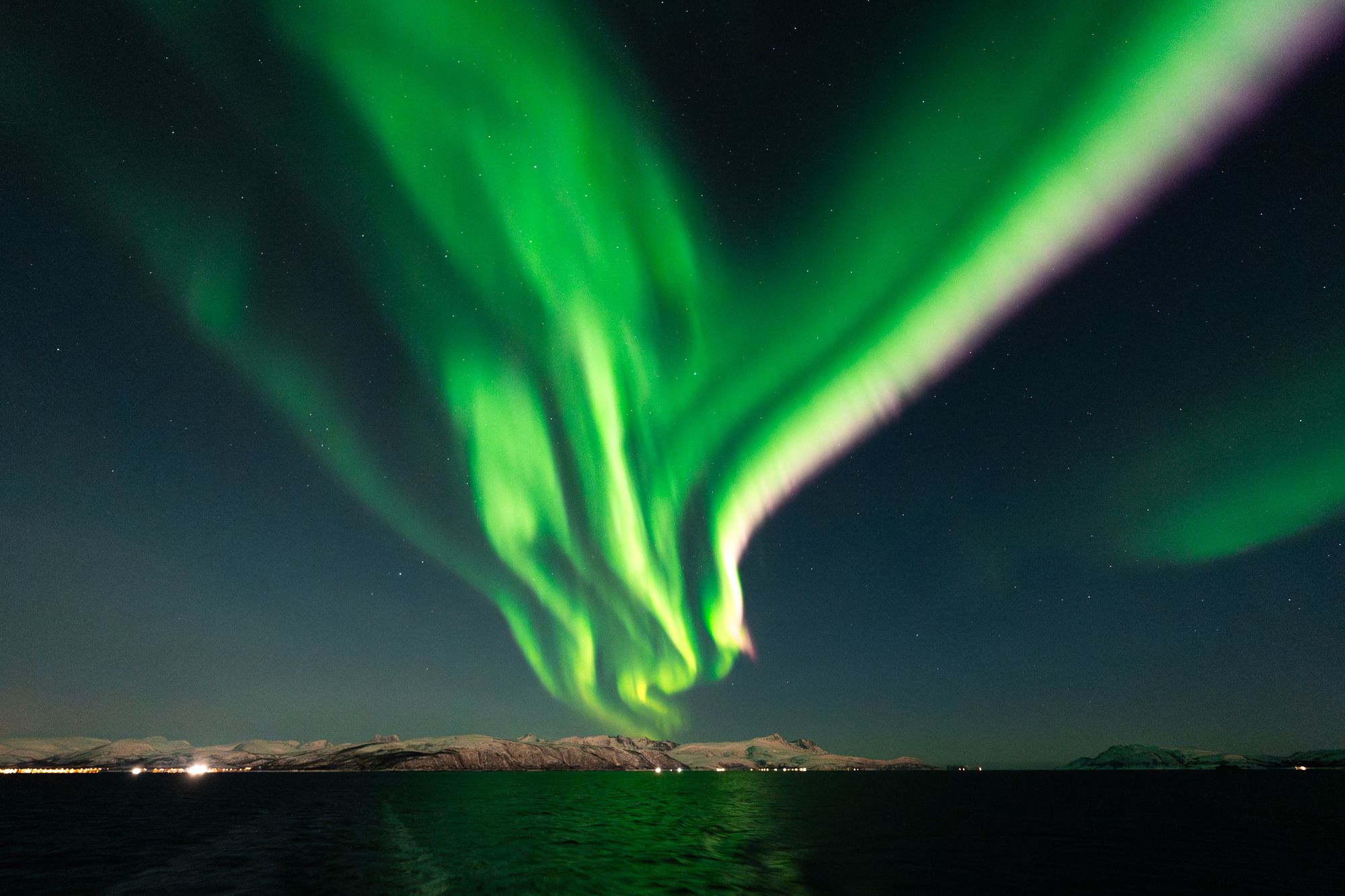
The solar flares caused by strong solar activity mean the northern lights appear more often.
Sciences & Vie no. 1236 (September 2020)
Sail to the Far North
aboard Polarfront
Twelve guests, a seasoned crew and passionate guides: the upcoming departures.
8 days / 7 nights Norway · Northern lightsPhoto voyage in Norway 11 of 12 spots Promo from€2,585 20Dec2026 returning Dec 28 Winter
9 days / 8 nights Norway · Northern lightsWinter magic in Norway 7 of 12 spots Promo from€2,975 28Dec2026 returning Jan 5 Winter
9 days / 8 nights Norway · Northern lightsWinter magic in Norway Only 3 spots left from€5,950 28Feb2027 returning Mar 7 Winter
8 days / 7 nights Norway · Northern lightsNorwegian gems in spring 8 of 12 spots from€5,280 16Apr2027 returning Apr 25 Spring
10 days / 9 nights Spitsbergen · WildlifePolar spring in Spitsbergen 12 of 12 spots from€12,490 25Apr2027 returning May 4 Spring
10 days / 9 nights Spitsbergen · WildlifePolar spring in Spitsbergen 5 of 12 spots from€12,490 4Aug2027 returning Aug 13 Summer
10 days / 9 nights Spitsbergen · WildlifeMidnight sun in Svalbard 11 of 12 spots from€12,620 22Aug2027 returning Sep 1 Summer
11 days / 10 nights Greenland · Northern lightsNortheast Greenland National Park Last spot from€13,880 19Sep2027 returning Sep 26 Fall
8 days / 7 nights Spitsbergen · Northern lightsAutumn escape to Svalbard 12 of 12 spots from€9,720 26Sep2027 returning Oct 4 Fall
9 days / 8 nights Spitsbergen · Northern lightsAutumn lights in Svalbard 10 of 12 spots from€11,110 4Oct2027 returning Oct 12 Fall
9 days / 8 nights Spitsbergen · Northern lightsAutumn lights in Svalbard 12 of 12 spots from€11,110 10Dec2027 returning Dec 18 Winter
9 days / 8 nights Norway · Northern lightsWinter magic in Norway 12 of 12 spots from€6,040 18Dec2027 returning Dec 26 Winter
9 days / 8 nights Norway · Northern lightsWinter magic in Norway 12 of 12 spots from€6,220 26Dec2027 returning Jan 3 Winter
9 days / 8 nights Norway · Northern lightsWinter magic in Norway 12 of 12 spots from€6,220
No upcoming departures for this selection.
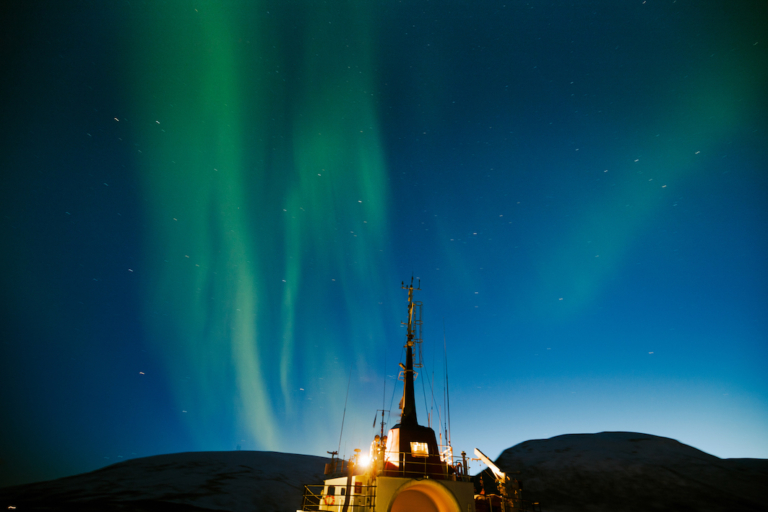
An extremely rare aurora has been observed in Spitsbergen
The phenomenon, never before observed from the Earth’s surface, is thought to be the result of a polar rain of electrons coming straight from the solar corona.
What is life like during the polar night?
People who live in Earth’s icy polar regions experience almost constant night every winter. This phenomenon is called the polar night, but what exactly is it? When does…
Where does the midnight sun come from?
The polar regions are known for the polar night, an almost unbroken winter night. In summer, on the other hand, the days grow longer and longer. The phenomenon…