Could whales one day talk to us?
Humankind has always dreamed of communicating with the other species we share our planet with. Understanding birdsong, interpreting the signals of primates or decoding the sounds of the great marine mammals: the idea of crossing the border between the animal and human worlds fascinates scientists and the general public alike.
Of all the animals that might bring us closer to this dream, whales hold a special place. In the vastness of the oceans, these giants communicate through songs and complex sounds that can sometimes travel several hundred kilometers underwater. For a long time, these vocalizations seemed mysterious. Today, thanks to advances in artificial intelligence and thousands of hours of accumulated recordings, researchers are beginning to glimpse a possibility that was once unimaginable: understanding part of their language.A sound encounter with a humpback whale
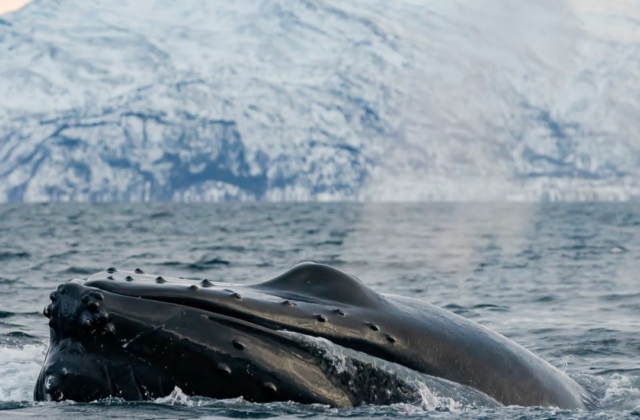
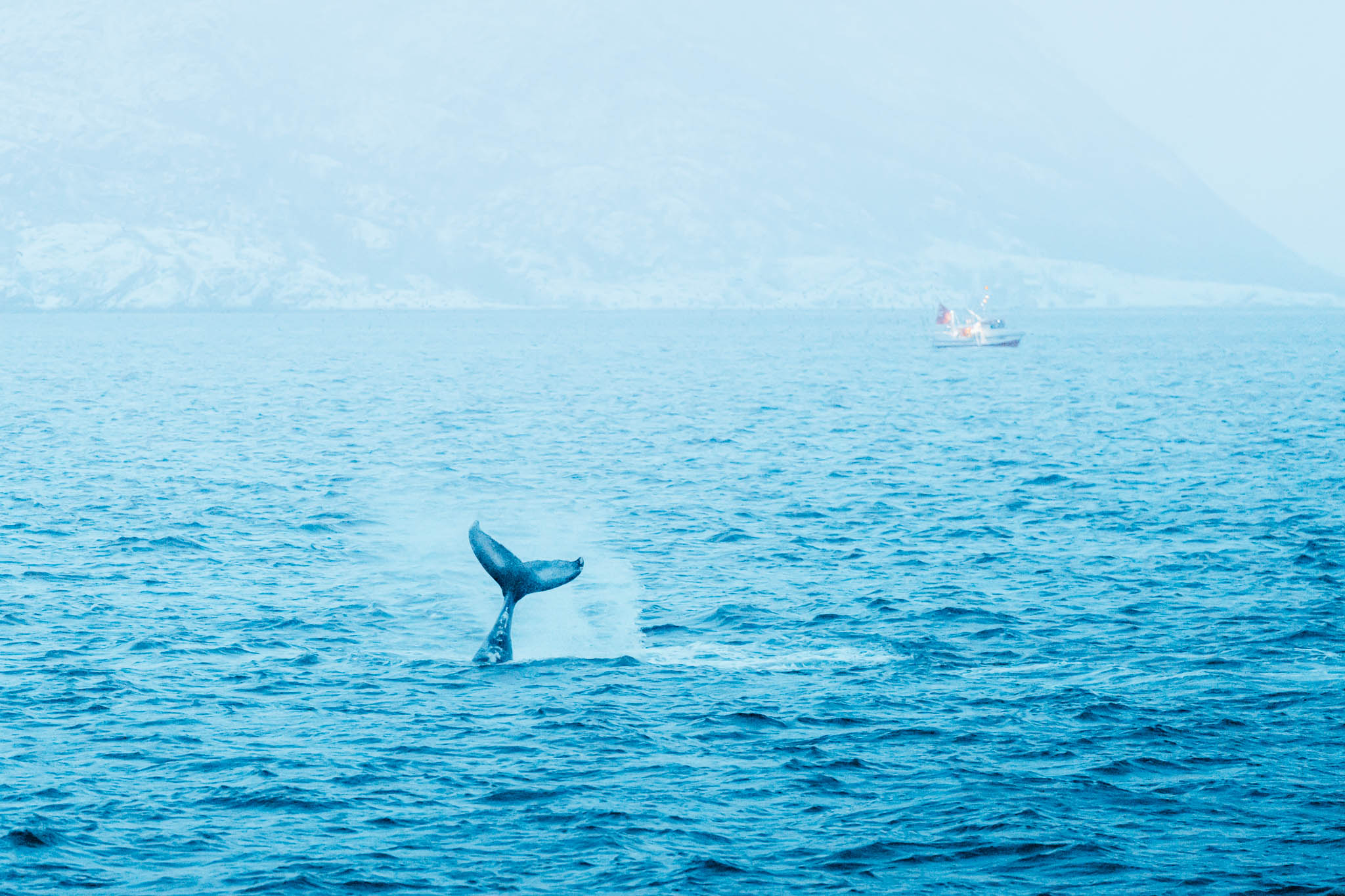
Some recent observations already show that whales are capable of remarkably sophisticated vocal interactions. Off the coast of Alaska, researchers had an astonishing experience with a humpback whale. The team led by Brenda McCowan, an animal behaviorist at the University of California, Davis, played a whale a recording of a contact call made by another group of whales: a sound known as a “whup.” The animal’s reaction surprised the scientists. The whale did not just answer once. It approached the boat and engaged in a genuine vocal exchange for several minutes. Even more surprising, it seemed to adjust its replies to the rhythm of the signals sent by the researchers, respecting the spacing between calls. For the scientists, this synchronization is an important clue: it suggests a form of interactive communication, in which each party takes the other into account. But one essential question remains: does this interaction contain a real message? For now, researchers remain cautious. They have no proof that whales exchange information comparable to human words, or that they have a structured language like ours. But recent discoveries make this hypothesis less unlikely than it once was.Songs far more complex than a simple exchange of sounds
Whales do not make random sounds. Among humpback whales, males compose true songs that can last for tens of minutes and be repeated for hours. These melodies change over time: new sequences appear, others disappear, and some songs gradually spread from one population to another. In sperm whales, communication is even more fascinating. These giants of the deep use series of clicks called codas, mainly to communicate with members of their own social group. Each community has its own sound signatures, comparable to dialects. Some sperm whale families use specific rhythms and sequences that allow individuals to recognize one another and maintain their social bonds.Artificial intelligence opens a new door
For decades, analyzing these vocalizations was extremely difficult. The oceans are immense, recordings are rare, and whale sounds can be affected by many factors: depth, the distance between individuals, the acoustic environment or the social context. But the arrival of artificial intelligence is changing everything. Algorithms can now analyze millions of sound sequences and pick out repetitions, structures and variations that the human ear could never identify. It was against this backdrop that Project CETI (Cetacean Translation Initiative) was launched in 2020, an ambitious international program that aims to better understand how sperm whales communicate. Its name is a deliberate nod to the SETI program, which has been searching for decades for possible signals from extraterrestrial civilizations. In both cases, the approach is similar: listen, analyze and try to understand an unknown form of communication.Sounds reminiscent of the structures of human language
The first algorithmic analyses have produced some particularly intriguing results. Some studies show that sperm whale click sequences have complex structures, with variations in rhythm, duration and organization that seem to depend on context. Researchers have identified repeated combinations, subtle variations and patterns reminiscent of certain mechanisms found in human languages. According to David Gruber, a marine biologist and the founder of Project CETI, sperm whale vocalizations may even contain elements comparable to basic units of sound. With his team, he has developed an artificial intelligence model called WhAM, which can generate click sequences resembling those recorded from wild sperm whales. But there is still a huge difference between reproducing a sound and understanding what it means. Today, researchers can recognize structures, but they still do not know what whales are actually “saying.”Understanding a language from the deep
Decoding cetacean communication is an immense challenge. Whales live in a sensory world very different from ours. They move through an environment where sound largely replaces sight, because very little light reaches the ocean depths. Their vocalizations could carry information about identity, social relationships, location, emotions or the environment around them. But it is also possible that their way of communicating relies on concepts that are completely foreign to us. As David Gruber puts it:“I don’t know if the decoding will happen in our lifetime, but we are making significant progress.”
A future dialogue with the giants of the oceans?
For a long time, the idea of talking with a whale seemed like science fiction. Today, it belongs to the realm of scientific research. Advances in artificial intelligence, combined with field observations and the huge acoustic databases collected all over the world, offer a unique opportunity to discover a world of sound we had only glimpsed. Perhaps we will never fully understand the language of whales. But every new song analyzed, every interaction observed and every structure uncovered brings us a little closer to these giants of the oceans. And beyond the scientific achievement, trying to understand their voices could also change the way we see them: no longer just as fascinating animals to watch, but as intelligent, social and sentient beings with whom we share the planet.Sail to Norway
aboard Polarfront
Twelve guests, a seasoned crew and passionate guides: the upcoming departures.
8 days / 7 nights Norway · Northern lightsPhoto voyage in Norway 11 of 12 spots Promo from€2,585 20Dec2026 returning Dec 28 Winter
9 days / 8 nights Norway · Northern lightsWinter magic in Norway 7 of 12 spots Promo from€2,975 28Dec2026 returning Jan 5 Winter
9 days / 8 nights Norway · Northern lightsWinter magic in Norway Only 3 spots left from€5,950 28Feb2027 returning Mar 7 Winter
8 days / 7 nights Norway · Northern lightsNorwegian gems in spring 8 of 12 spots from€5,280 10Dec2027 returning Dec 18 Winter
9 days / 8 nights Norway · Northern lightsWinter magic in Norway 12 of 12 spots from€6,040 18Dec2027 returning Dec 26 Winter
9 days / 8 nights Norway · Northern lightsWinter magic in Norway 12 of 12 spots from€6,220 26Dec2027 returning Jan 3 Winter
9 days / 8 nights Norway · Northern lightsWinter magic in Norway 12 of 12 spots from€6,220
No upcoming departures for this selection.

Polar bears in Spitsbergen: where and when to see them
Seeing a polar bear in the wild is the dream of many travelers heading to Spitsbergen. The archipelago is one of the best places in the world to…

10 sounds of the Arctic you will never forget
Traveling in the polar regions means learning to slow down and pay attention to details we often overlook in everyday life. In these places, where the absence of…
Arctic fox: how does it survive in one of the most hostile environments on the planet?
In the white vastness of the Arctic, a discreet silhouette sometimes crosses the snow-covered tundra. Fast, agile and perfectly camouflaged, the Arctic fox (Vulpes lagopus) is one of…