In February, we celebrate whales
On February 19, we celebrated World Whale Day, an opportunity to remind everyone how important it is to protect these ocean giants and, more broadly, all marine mammals.
Why whales are essential to our planet’s balance
February 19 marks World Whale Day, an opportunity to celebrate these ocean giants and to remember the fundamental role they play in how our planet works. Long hunted for their oil, their blubber or their baleen, whales have now become a symbol of ocean conservation. Yet their importance goes far beyond their status as iconic species. By influencing marine ecosystems, the carbon cycle and even oxygen production, they play an active part in maintaining the Earth’s great balances. Protecting whales, then, also means protecting the climate, biodiversity and the oceans on which so much of life on our planet depends.Whales, the gardeners of the oceans
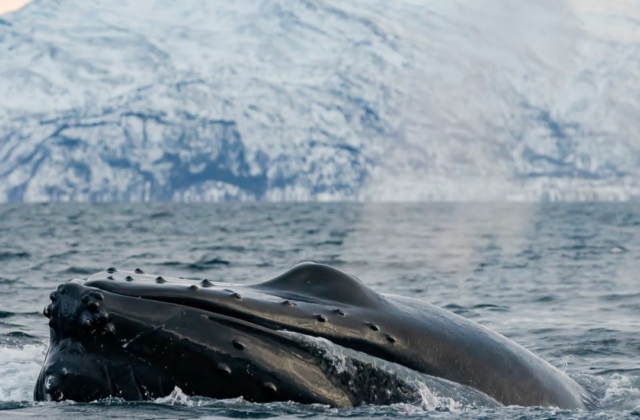
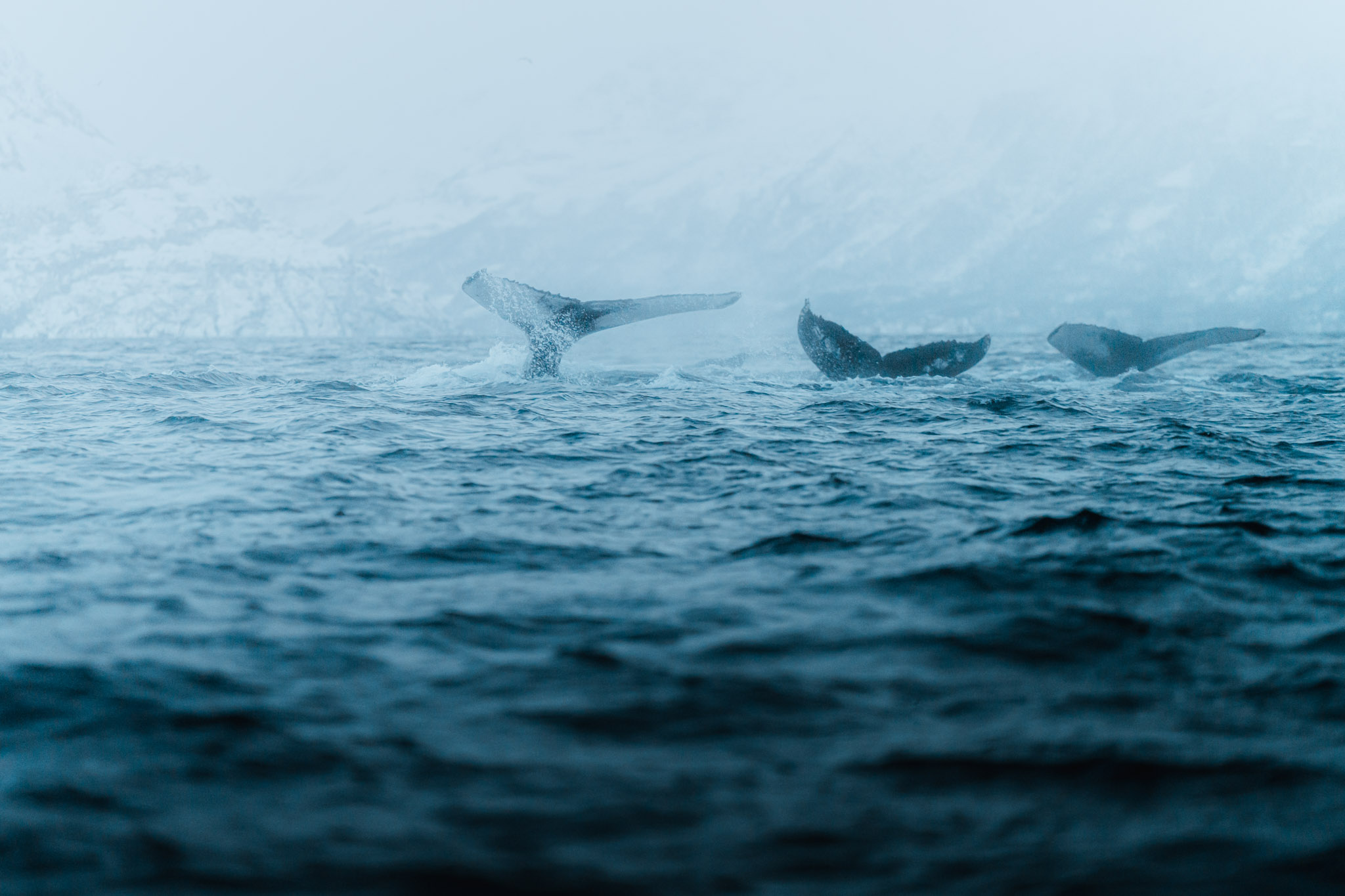
At first glance, a whale seems simply to roam the oceans in search of food. In reality, each of its movements contributes to an essential ecological process. Most great whales feed at depth, sometimes several hundred meters below the surface. There they catch krill, fish or squid before rising to breathe and rest at the surface. On these constant round trips, they bring nutrients up from the depths with them. By releasing their feces near the surface, they enrich the upper layers of the ocean with nitrogen, phosphorus and iron. This phenomenon is known as the “whale pump”. Far from being a mere biological detail, this natural recycling acts as a true marine fertilizer. It stimulates the growth of phytoplankton, the invisible microorganisms that form the base of the entire ocean food chain.Phytoplankton: an indispensable ally against climate change
Phytoplankton is often described as the “invisible forest of the oceans.” Through photosynthesis, it produces nearly half of the oxygen in our atmosphere. In other words, one in every two breaths we take is made possible by these microscopic organisms. Phytoplankton also plays a major role in regulating the climate. By absorbing carbon dioxide (CO₂), it helps limit the buildup of greenhouse gases in the atmosphere. The oceans absorb nearly a quarter of global human-made CO₂ emissions, and a large share of that capacity depends on phytoplankton. By promoting its growth, whales indirectly contribute to oxygen production and carbon storage on a planetary scale.True carbon sinks
Whales also play a direct role in the fight against climate change. Throughout their lives, they accumulate carbon in their muscles, bones and tissues. A great whale can store more than 30 metric tons of carbon dioxide, far more than most trees. When the animal dies of natural causes, its immense body slowly sinks to the seafloor. The carbon it contains is then locked away in the depths for several centuries, or even longer. Scientists call this a “whale fall”. Each whale that reaches the deep seafloor then becomes much more than just a carcass.A dead whale becomes a haven for life
More than 1,000 meters down, food is scarce. The arrival of a whale is therefore an exceptional event. Its remains feed an incredible variety of organisms, one after another: sleeper sharks, deep-sea fish, crabs, amphipods, marine worms, sea stars, specialized bacteria… Some species even live exclusively on whale carcasses. For several decades, a single whale fall can support hundreds of different species and create a true oasis of biodiversity in the heart of the abyss. These fascinating ecosystems are among the most astonishing on the planet, and they show how whales continue to play an essential ecological role, even after death.Populations that are still fragile
Although commercial whaling has declined sharply since the international moratorium of 1986, many species remain vulnerable. Today, whales face multiple threats: collisions with ships, entanglement in fishing gear, chemical and plastic pollution, underwater noise, dwindling prey and the effects of climate change. Some populations are showing encouraging signs of recovery, while others remain endangered. Protecting them therefore remains a major challenge for ocean conservation.Protecting whales means protecting the future of the oceans
Whales remind us that no species lives in isolation. Their mere presence influences the flow of nutrients, supports the growth of phytoplankton, promotes carbon storage and sustains biodiversity all the way down to the abyssal depths. By protecting these giants of the sea, we help preserve one of our planet’s most precious natural allies in the face of today’s environmental challenges. World Whale Day is therefore much more than a celebration. It is an invitation to better understand these extraordinary animals and to recognize that their future is closely tied to our own. Because protecting whales also means protecting the oceans… and, ultimately, our own future.Sail to the Far North
aboard Polarfront
Twelve guests, a seasoned crew and passionate guides: the upcoming departures.
8 days / 7 nights Norway · Northern lightsPhoto voyage in Norway 11 of 12 spots Promo from€2,585 20Dec2026 returning Dec 28 Winter
9 days / 8 nights Norway · Northern lightsWinter magic in Norway 7 of 12 spots Promo from€2,975 28Dec2026 returning Jan 5 Winter
9 days / 8 nights Norway · Northern lightsWinter magic in Norway Only 3 spots left from€5,950 28Feb2027 returning Mar 7 Winter
8 days / 7 nights Norway · Northern lightsNorwegian gems in spring 8 of 12 spots from€5,280 16Apr2027 returning Apr 25 Spring
10 days / 9 nights Spitsbergen · WildlifePolar spring in Spitsbergen 12 of 12 spots from€12,490 25Apr2027 returning May 4 Spring
10 days / 9 nights Spitsbergen · WildlifePolar spring in Spitsbergen 5 of 12 spots from€12,490 4Aug2027 returning Aug 13 Summer
10 days / 9 nights Spitsbergen · WildlifeMidnight sun in Svalbard 11 of 12 spots from€12,620 22Aug2027 returning Sep 1 Summer
11 days / 10 nights Greenland · Northern lightsNortheast Greenland National Park Last spot from€13,880 19Sep2027 returning Sep 26 Fall
8 days / 7 nights Spitsbergen · Northern lightsAutumn escape to Svalbard 12 of 12 spots from€9,720 26Sep2027 returning Oct 4 Fall
9 days / 8 nights Spitsbergen · Northern lightsAutumn lights in Svalbard 10 of 12 spots from€11,110 4Oct2027 returning Oct 12 Fall
9 days / 8 nights Spitsbergen · Northern lightsAutumn lights in Svalbard 12 of 12 spots from€11,110 10Dec2027 returning Dec 18 Winter
9 days / 8 nights Norway · Northern lightsWinter magic in Norway 12 of 12 spots from€6,040 18Dec2027 returning Dec 26 Winter
9 days / 8 nights Norway · Northern lightsWinter magic in Norway 12 of 12 spots from€6,220 26Dec2027 returning Jan 3 Winter
9 days / 8 nights Norway · Northern lightsWinter magic in Norway 12 of 12 spots from€6,220
No upcoming departures for this selection.
Polar bears in Spitsbergen: where and when to see them
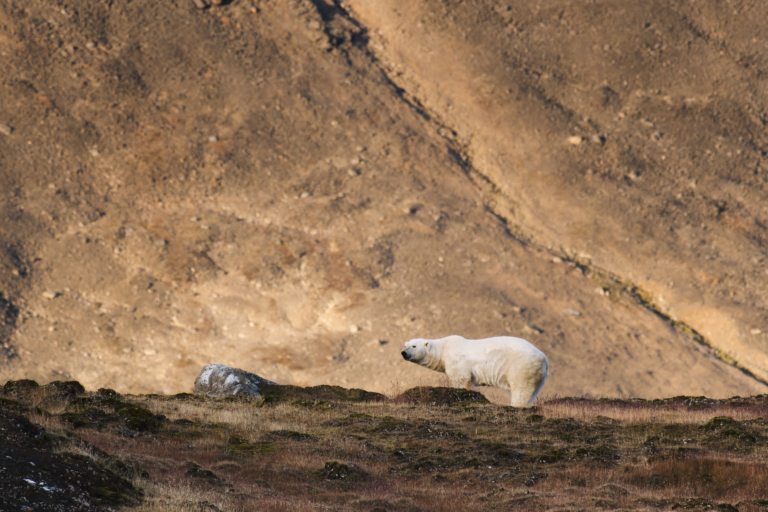
Seeing a polar bear in the wild is the dream of many travelers heading to Spitsbergen. The archipelago is one of the best places in the world to…
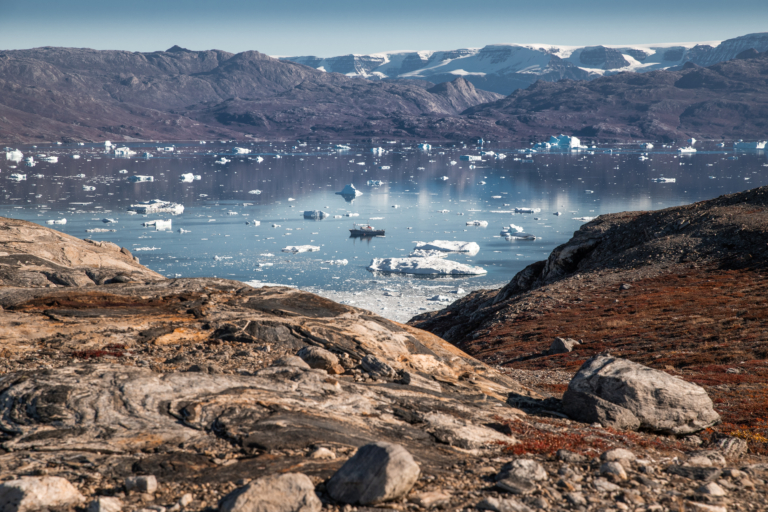
10 sounds of the Arctic you will never forget
Traveling in the polar regions means learning to slow down and pay attention to details we often overlook in everyday life. In these places, where the absence of…
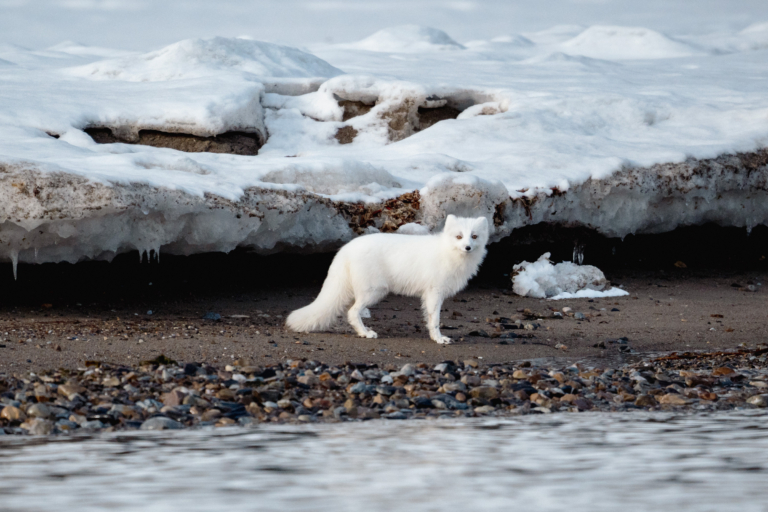
Arctic fox: how does it survive in one of the most hostile environments on the planet?
In the white vastness of the Arctic, a discreet silhouette sometimes crosses the snow-covered tundra. Fast, agile and perfectly camouflaged, the Arctic fox (Vulpes lagopus) is one of…