Why do leaves change color in the fall?
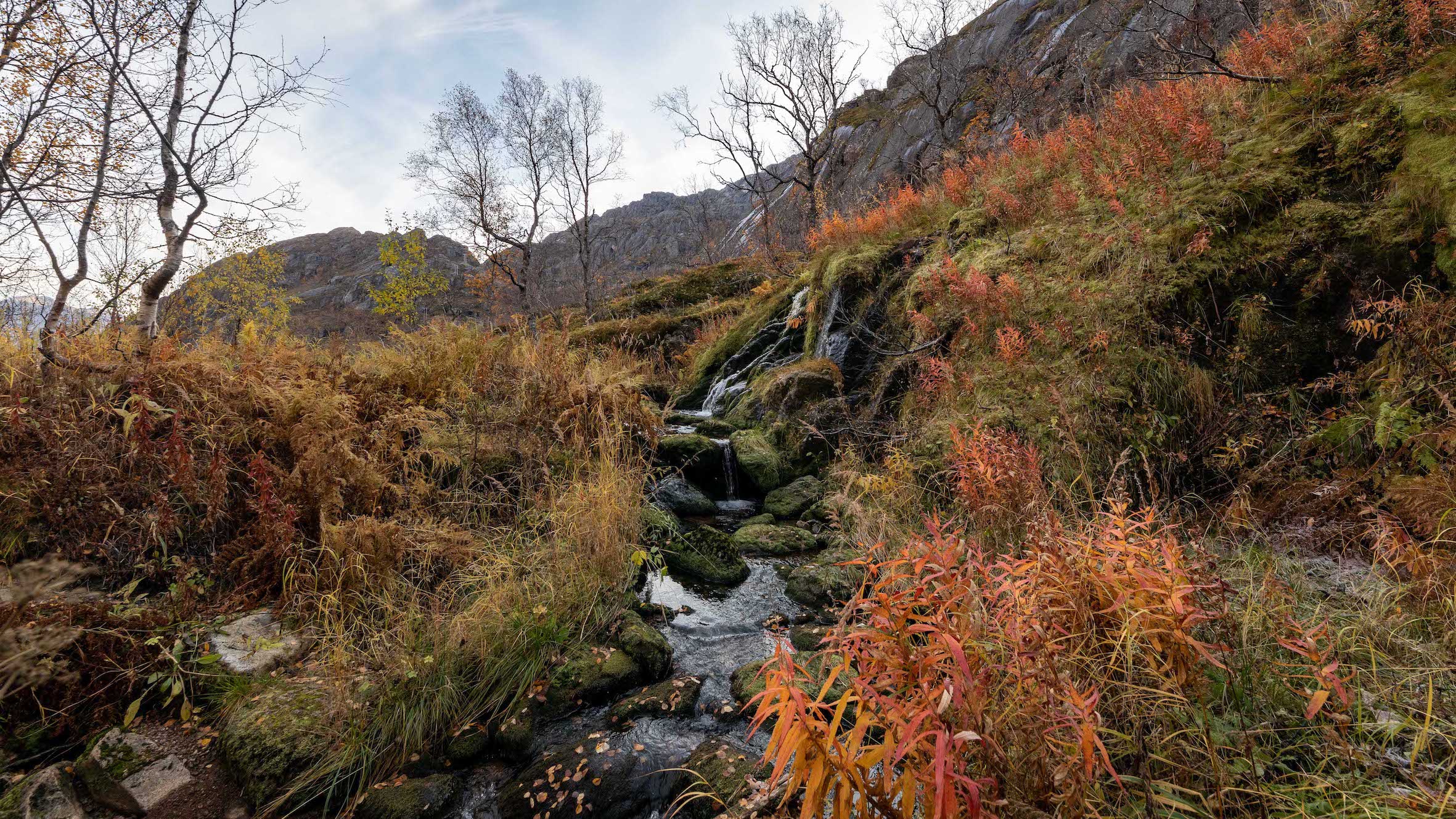
Every year, from the first days of fall, the landscape is transformed. Forests turn shades of gold, orange and red before the leaves gradually drop to the ground. As beautiful as it is, this spectacle is no mere whim of nature: it is a remarkable survival strategy that trees use to face the winter.
Trees see winter coming
Unlike animals, trees cannot move to escape the cold. They have to adapt to the changing seasons.
As temperatures fall and the days grow shorter, trees sense these changes through the dwindling light and shifts in temperature. These signals trigger a whole series of biological reactions that prepare the tree for the cold season.
One of the main strategies is to cut down on exchanges with the outside world. Leaves, which make up the largest surface in contact with the air, are also responsible for significant water loss through evaporation. In winter, when the ground is frozen, roots have a much harder time absorbing water. Keeping their foliage would then become a real handicap.
Deciduous trees therefore opt for a radical solution: shedding their leaves until spring returns.
Ethylene, the messenger of fall
This transformation is orchestrated by a plant hormone called ethylene.
As fall conditions set in, trees gradually step up production of this molecule, which acts as a true signal to go dormant.
Under its influence, a separation layer, often likened to a tiny cork plug, forms at the base of the petiole, the point where the leaf is attached to the branch.
Little by little, this layer blocks the flow of sap between the branch and the leaf. Deprived of water and nutrients, the leaf then enters a phase called senescence, a natural, programmed aging process.
Before letting the leaf go, however, the tree recovers much of the precious elements it contains, including nitrogen, phosphorus and some sugars, which are stored in the trunk and roots to be reused the following spring.
Why do leaves turn yellow, red or orange?
The green color of leaves comes from chlorophyll, the pigment essential to photosynthesis.
Throughout the growing season, chlorophyll is produced continuously. Its high concentration masks the other pigments naturally present in the leaf’s cells.
When senescence begins, chlorophyll production gradually stops and the existing molecules break down.
The green then slowly fades, revealing other pigments that had been invisible until then.
Carotenoids, present in leaves all year round, bring out yellow and orange hues. These are the same pigments found in carrots, squash and some varieties of corn.
Anthocyanins, on the other hand, are often produced during the fall. They create shades ranging from bright red to deep purple, like those seen on maples, grapevines and some oaks.
Why don’t all trees turn the same colors?
Each species has its own fall palette.
Birches and poplars usually turn golden yellow, while beeches take on coppery tones. Maples are famous for the fiery reds that have made Canada’s forests so renowned.
The weather also plays a key role.
Sunny days followed by cool nights boost anthocyanin production and intensify the reds. A mild, rainy or very cloudy fall, on the other hand, will often produce more muted colors.
That is why fall landscapes are never exactly the same from one year to the next.
Why do leaves eventually turn brown?
As the leaf ages, all its pigments eventually break down.
All that remains are the compounds in the cell walls and dead tissue, which give leaves their characteristic brown color.
The separation layer at the base of the petiole is now fully formed.
A simple gust of wind or the weight of the rain is then enough for the leaf to break off for good and fall to the ground.
A cycle essential to the life of the forest
Once on the ground, leaves do not become waste.
Broken down by fungi, bacteria, insects and earthworms, they gradually enrich the soil with humus, a fertile, nutrient-rich layer.
These nutrients will then be absorbed by the trees’ roots and help new leaves grow in the spring.
So the magnificent colors of fall are not just a feast for the eyes. They mark the beginning of a vast natural recycling cycle, essential to the health of forests and to the renewal of plant life year after year.Sail to the Far North
aboard Polarfront
Twelve guests, a seasoned crew and passionate guides: the upcoming departures.
8 days / 7 nights Norway · Northern lightsPhoto voyage in Norway 11 of 12 spots Promo from€2,585 20Dec2026 returning Dec 28 Winter
9 days / 8 nights Norway · Northern lightsWinter magic in Norway 7 of 12 spots Promo from€2,975 28Dec2026 returning Jan 5 Winter
9 days / 8 nights Norway · Northern lightsWinter magic in Norway Only 3 spots left from€5,950 28Feb2027 returning Mar 7 Winter
8 days / 7 nights Norway · Northern lightsNorwegian gems in spring 8 of 12 spots from€5,280 16Apr2027 returning Apr 25 Spring
10 days / 9 nights Spitsbergen · WildlifePolar spring in Spitsbergen 12 of 12 spots from€12,490 25Apr2027 returning May 4 Spring
10 days / 9 nights Spitsbergen · WildlifePolar spring in Spitsbergen 5 of 12 spots from€12,490 4Aug2027 returning Aug 13 Summer
10 days / 9 nights Spitsbergen · WildlifeMidnight sun in Svalbard 11 of 12 spots from€12,620 22Aug2027 returning Sep 1 Summer
11 days / 10 nights Greenland · Northern lightsNortheast Greenland National Park Last spot from€13,880 19Sep2027 returning Sep 26 Fall
8 days / 7 nights Spitsbergen · Northern lightsAutumn escape to Svalbard 12 of 12 spots from€9,720 26Sep2027 returning Oct 4 Fall
9 days / 8 nights Spitsbergen · Northern lightsAutumn lights in Svalbard 10 of 12 spots from€11,110 4Oct2027 returning Oct 12 Fall
9 days / 8 nights Spitsbergen · Northern lightsAutumn lights in Svalbard 12 of 12 spots from€11,110 10Dec2027 returning Dec 18 Winter
9 days / 8 nights Norway · Northern lightsWinter magic in Norway 12 of 12 spots from€6,040 18Dec2027 returning Dec 26 Winter
9 days / 8 nights Norway · Northern lightsWinter magic in Norway 12 of 12 spots from€6,220 26Dec2027 returning Jan 3 Winter
9 days / 8 nights Norway · Northern lightsWinter magic in Norway 12 of 12 spots from€6,220
No upcoming departures for this selection.
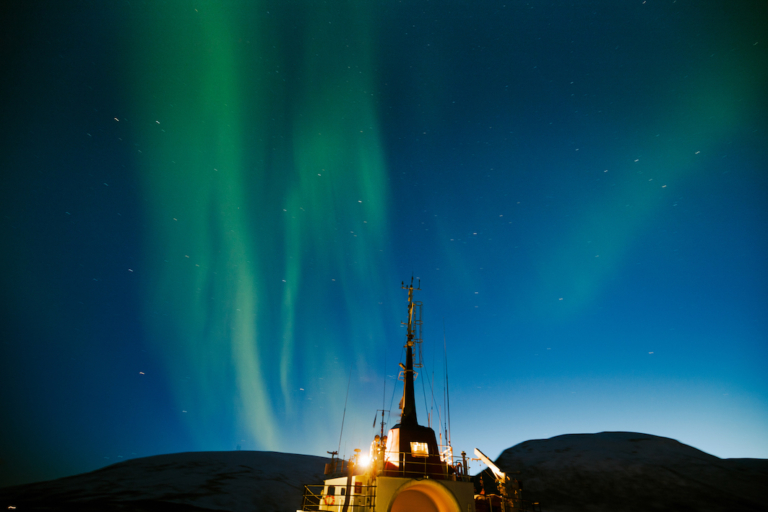
An extremely rare aurora has been observed in Spitsbergen
The phenomenon, never before observed from the Earth’s surface, is thought to be the result of a polar rain of electrons coming straight from the solar corona.
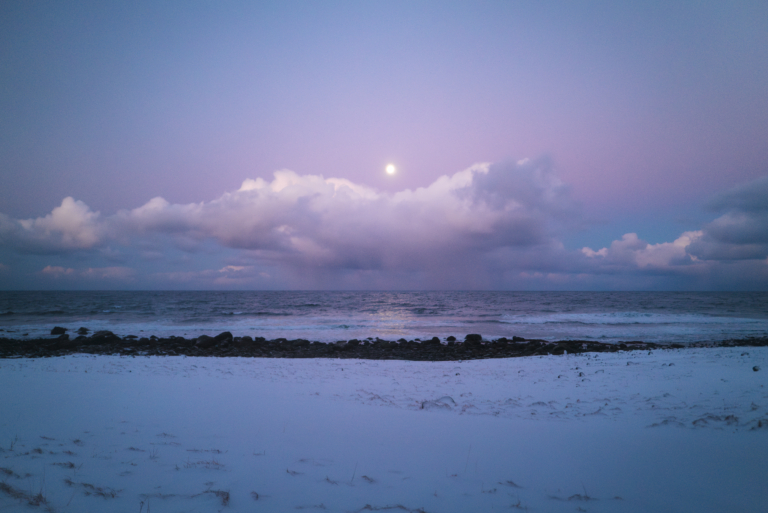
What is life like during the polar night?
People who live in Earth’s icy polar regions experience almost constant night every winter. This phenomenon is called the polar night, but what exactly is it? When does…

Where does the midnight sun come from?
The polar regions are known for the polar night, an almost unbroken winter night. In summer, on the other hand, the days grow longer and longer. The phenomenon…