When to go to East Greenland: a late-summer guide
Locked in by ice for much of the year, Greenland’s east coast only opens up at the end of summer. Late August or September, long golden evenings or the first northern lights: here is how to choose the right time for your voyage, with tips from our crew.
East Greenland at a glance
Greenland is the largest island in the world, four-fifths of it covered by its ice sheet. Its east coast, facing the Greenland Sea, is one of the most remote regions of the Arctic. It is home to Northeast Greenland National Park, the largest national park in the world at nearly 972,000 km², and to Scoresby Sund, the largest fjord system on the planet, famous for its giant icebergs.
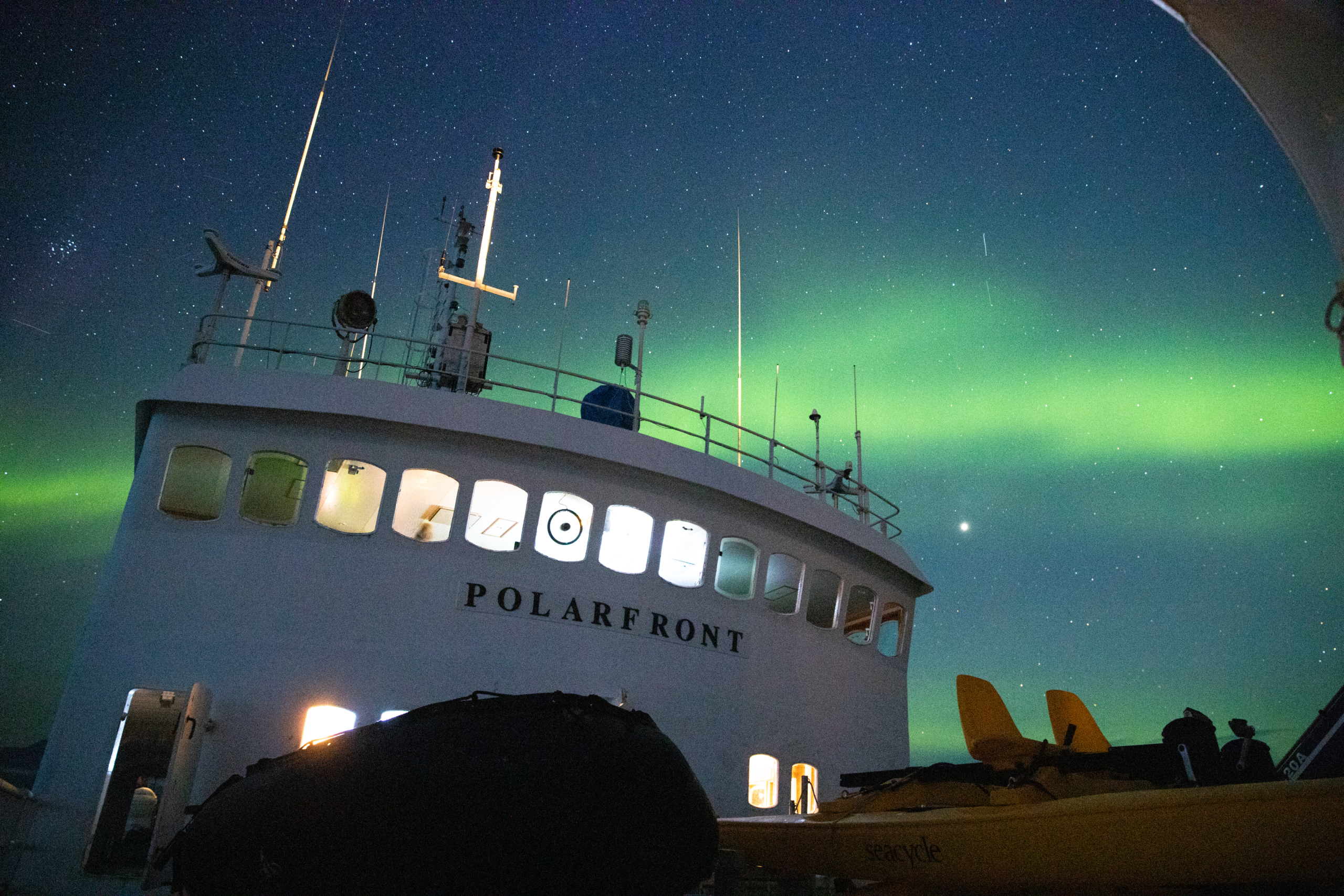
For hundreds of kilometers there is no settlement at all, apart from Ittoqqortoormiit, a village of about 330 people at the mouth of Scoresby Sund. Our East Greenland voyages follow this coast aboard Polarfront, with just twelve guests.
Why only at the end of summer?
A cold current flows down the east coast from the Arctic Ocean, carrying sea ice south. For much of the year, this ice blocks access by sea. Only at the end of the Arctic summer, from late July to September, does the coast clear enough for a ship to explore it: it is the only window of the year.
Even then, the ice has the final say. The state of the sea ice and the weather decide the route every day: the captain and our guides adapt the itinerary, and the places described on our voyage pages are the ones we aim for, with no guarantee of reaching them all. That is what an expedition is about.
Late August: the end of the Arctic summer
In late August, temperatures hover around 5 °C on average and the days are still long, stretched out by slow golden evenings. This is the season of our voyage from Spitsbergen to East Greenland. After two days at sea along the edge of the sea ice, on the lookout for walruses, seals and polar bears, Polarfront follows the coast of Northeast Greenland National Park.
On the program: Île de France, once home to Inuit communities; Dove Bay, crowded with icebergs, in musk ox country; the Pendulum Islands and the traces left by explorers; Kaiser Franz Joseph Fjord and its colorful cliffs; then Ittoqqortoormiit and the colossal icebergs of Scoresby Sund. The voyage ends at Constable Point, where a private flight takes you back to Iceland.
Our voyage: From Spitsbergen to East Greenland, 11 days, Aug 22 – Sep 1, 2027.
September: tundra colors and the first northern lights
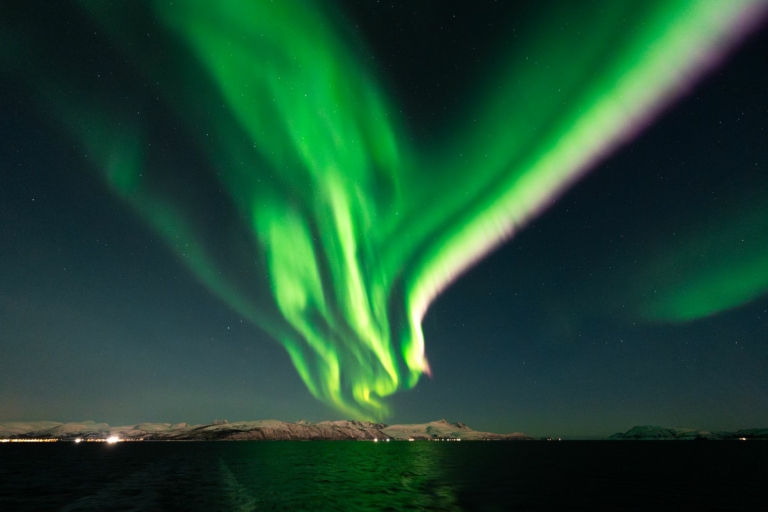
In September, temperatures hover around 0 °C. The tundra takes on its fall colors and the nights grow dark again: the first northern lights may appear above the fjords. They remain a gift of nature, never guaranteed.
This is the season of our voyage from East Greenland to Spitsbergen, which follows the route in reverse. A private flight takes you from Reykjavik to Constable Point, in the heart of Scoresby Sund, where you board. Polarfront explores Scoresby Sund, calls at Ittoqqortoormiit, heads up the coast of the national park to Île de France, then crosses the Greenland Sea.
Our voyage: From East Greenland to Spitsbergen, 11 days, Sep 9 – 19, 2027.
What wildlife can you see?
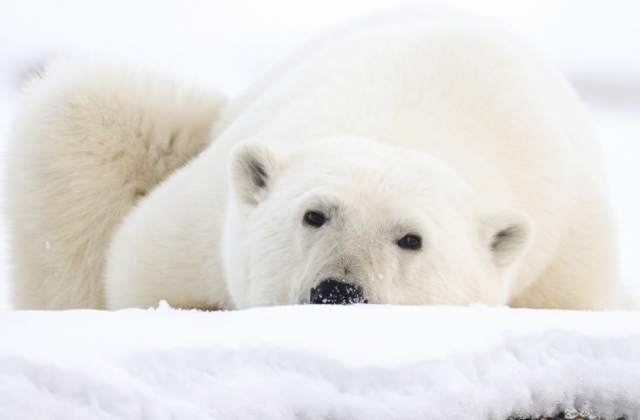
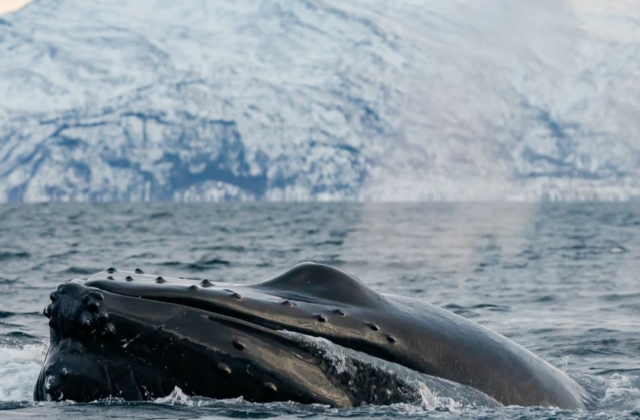
The east coast is home to iconic Arctic wildlife. The musk ox, a symbol of Greenland, grazes in the tundra valleys; the polar bear roams the sea ice and the shores; walruses and seals rest on the ice and on offshore islands. You may also spot Arctic hares and Arctic foxes, and sometimes whales offshore.
The deep waters of Scoresby Sund are home to the narwhal, elusive and rarely seen, which scientists have fitted with sensors to study the fjords: our article In Greenland, narwhals reveal the secrets of the deep tells the story of this research. Everywhere, nature decides: our naturalist guides know where to look, but no encounter is ever guaranteed.
Weather and gear
The east coast stays cool even in summer: around 5 °C in late August and 0 °C in September, with wind that can quickly make it feel colder. Pack warm layers, a hat, gloves and a waterproof, windproof jacket; on board, everyone receives an extreme-cold suit for Zodiac outings. Our detailed list: packing list for Greenland.
Between Spitsbergen and Greenland, the crossing takes two days in open sea: if you are prone to seasickness, bring medication. Otherwise, a good general level of fitness is enough: landings are made by Zodiac and hikes are adapted to the group.
East coast or west coast?
Greenland has two faces. The west coast, the most populated, is linked by domestic flights and welcomes most visitors. The east coast remains one of the wildest on the planet: no roads, only a handful of villages and a very short sailing season. This is the coast we chose, for its immense fjords, its icebergs and the rare feeling of being alone at the end of the world.
Our advice for choosing
- For long golden evenings and Greenland at the height of the Arctic summer: late August, from Spitsbergen to East Greenland.
- For fall colors, dark nights and the first northern lights: September, from East Greenland to Spitsbergen.
Either way, you set off for eleven days with just twelve guests aboard Polarfront and two naturalist guides, among the icebergs of Scoresby Sund and the musk oxen of the national park. For your budget, see our guide How much does an East Greenland voyage cost? And for personal advice, write to us: an advisor will reply within two business days.
WOULD YOU LIKE TO DISCOVER GREENLAND?
Sail to Greenland
aboard Polarfront
Twelve guests, a seasoned crew and passionate guides: the upcoming departures.
11 days / 10 nights Greenland · Northern lightsNortheast Greenland National Park Last spot from€13,880 9Sep2027 returning Sep 19 Fall
11 days / 10 nights Greenland · Northern lightsFrom East Greenland to Spitsbergen 12 of 12 spots from€13,880
No upcoming departures for this selection.
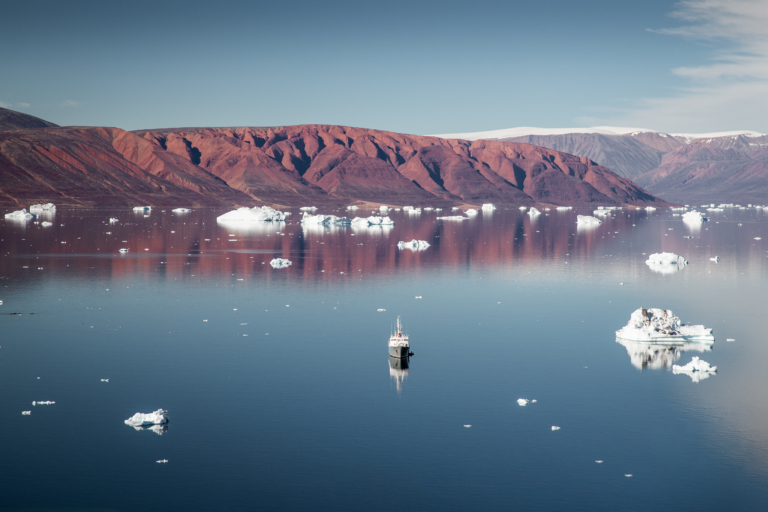
How much does an East Greenland voyage cost?
A voyage to East Greenland is a rare expedition to one of the most remote coasts in the Arctic. Here are our prices, what they include, the flights…
Polar cruise: cruise liner, expedition ship or sailboat?
Search for “polar cruise” and you will find ships that have almost nothing in common: from cruise liners carrying several thousand passengers to sailboats with a dozen berths.…
Northern lights in Norway: when and where to go
Northern Norway is one of the best places in the world to see the northern lights. You still need the right season, the right place and a clear…