Ringed, bearded or harbor seal: three ways of life in Svalbard’s fjords
From the deck of Polarfront, a round head popping up between two ice floes is all it takes to raise the binoculars. But which seal just surfaced? In Svalbard, fur and whiskers offer valuable clues. To find out what these animals do once underwater, researchers turned to a far less visible clue: the traces their diet leaves in their tissues.
Three seals to recognize, from the sea ice to the shore
The ringed seal owes its name to the pale rings that pattern its coat. Closely tied to sea ice, it can also be found in the waters in front of the glaciers that flow into the fjords. In Kongsfjorden, the analyses suggest it feeds mainly on prey living in open water.
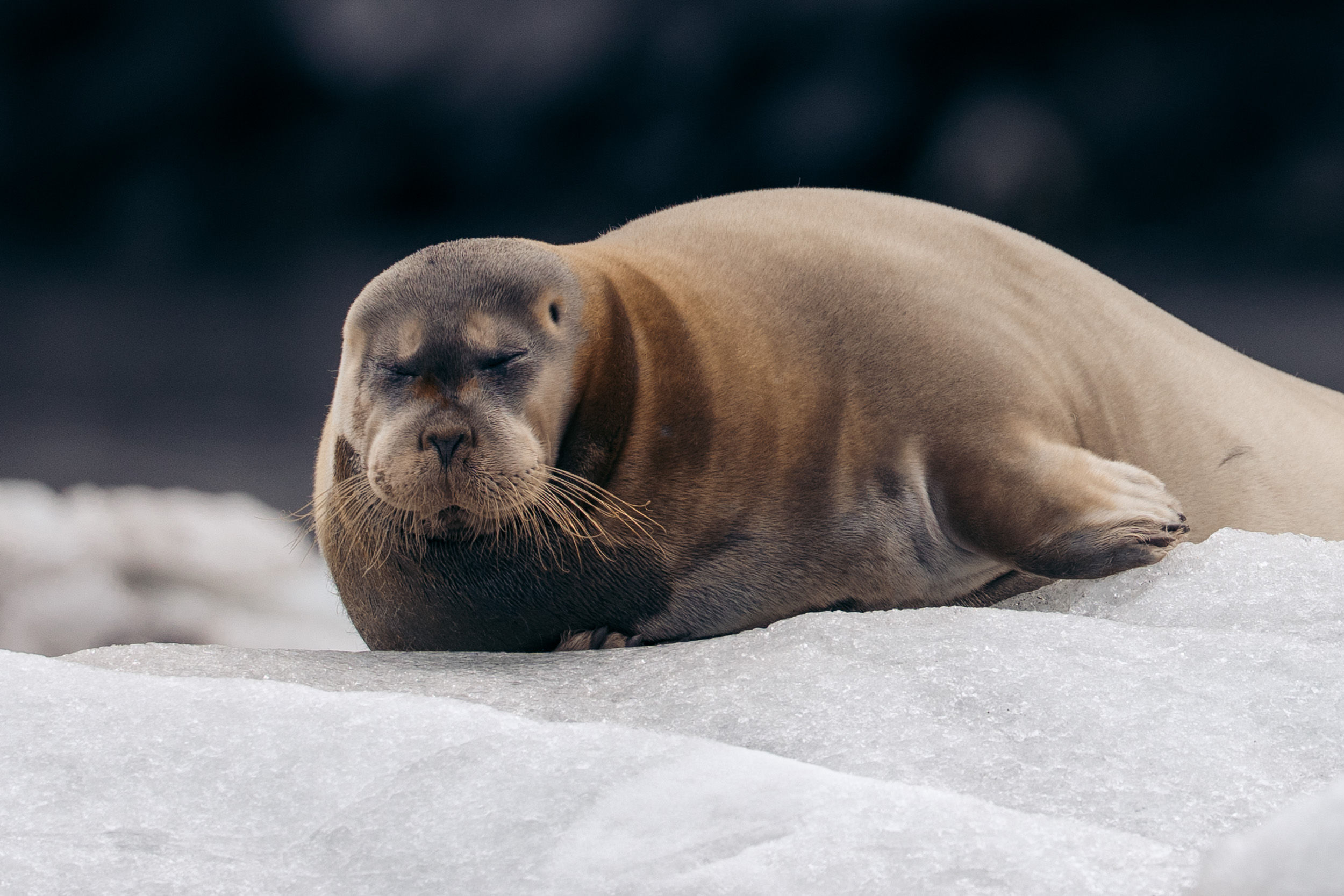
The bearded seal is easy to spot by its long whiskers and a head that looks small for its massive body. To understand what it eats, you have to look to the seafloor: the study’s results suggest it finds part of its prey there, especially in the shallow waters near the shore. The harbor seal, also called the common seal, is a regular along rocky coasts. In the fjord studied, it turns out to be more of a generalist: its diet includes both open-water prey and animals living on the bottom.How do you find out what a seal eats underwater?
In Kongsfjorden, on the west coast of Spitsbergen, Olof Bengtsson and his colleagues compared samples taken between 2021 and 2023 from 41 harbor seals, 11 ringed seals and four bearded seals. By analyzing chemical markers in the skin and blubber, then comparing them with those of potential prey, they were able to make out the broad patterns of their diet.
The comparison held an interesting result: it was the harbor seals and the bearded seals whose dietary signatures were most alike. These two species appear to use similar resources in the fjord’s shallow waters. The ringed seal stands further apart, even though it probably shares some prey with the harbor seal.Does sharing a menu mean competing?
As the harbor seal expands its range along Svalbard’s west coast, researchers wonder how this coexistence will evolve. Two species can feed on similar prey without competing: among other things, you would need to show that these resources are running short and that sharing them affects one species or the other. The study, carried out in a single fjord and based on four bearded seals, does not support that conclusion. You may come across all three on our voyages to Spitsbergen, from the deck of Polarfront or by Zodiac.
On your next expedition to Svalbard aboard Polarfront, take the time to notice where a seal appears as much as the features that identify it. A glacier front, a rocky islet, a shallow cove: behind the scenery lie as many ways of living in the same fjord.Further reading: study by Olof Bengtsson and colleagues, published on June 17, 2026 in Polar Biology · NAMMCO summary of October 27, 2026.
Sail to Spitsbergen
aboard Polarfront
Twelve guests, a seasoned crew and passionate guides: the upcoming departures.
10 days / 9 nights Spitsbergen · BanquisePolar spring in Spitsbergen 12 of 12 spots from€12,490 25Apr2027 returning May 4 Spring
10 days / 9 nights Spitsbergen · BanquisePolar spring in Spitsbergen Only 3 spots left from€12,490 23May2027 returning Jun 1 Spring
10 days / 9 nights Spitsbergen · BanquisePolar spring in Spitsbergen 12 of 12 spots from€12,490 4Aug2027 returning Aug 13 Summer
10 days / 9 nights Spitsbergen · WildlifeMidnight sun in Svalbard 11 of 12 spots from€12,620 19Sep2027 returning Sep 26 Fall
8 days / 7 nights Spitsbergen · Northern lightsAutumn escape to Svalbard 12 of 12 spots from€9,720 26Sep2027 returning Oct 4 Fall
9 days / 8 nights Spitsbergen · Northern lightsAutumn lights in Svalbard 10 of 12 spots from€11,110 4Oct2027 returning Oct 12 Fall
9 days / 8 nights Spitsbergen · Northern lightsAutumn lights in Svalbard 12 of 12 spots from€11,110 4Apr2028 returning Apr 11 Spring
8 days / 7 nights Spitsbergen · BanquisePolar escape to Spitsbergen 12 of 12 spots from€8,350 11Apr2028 returning Apr 18 Spring
8 days / 7 nights Spitsbergen · BanquisePolar escape to Spitsbergen 12 of 12 spots from€8,350 18Apr2028 returning Apr 27 Spring
10 days / 9 nights Spitsbergen · BanquisePolar spring in Spitsbergen 12 of 12 spots from€12,620
No upcoming departures for this selection.
Beneath the surface of East Greenland, the great whale gathering
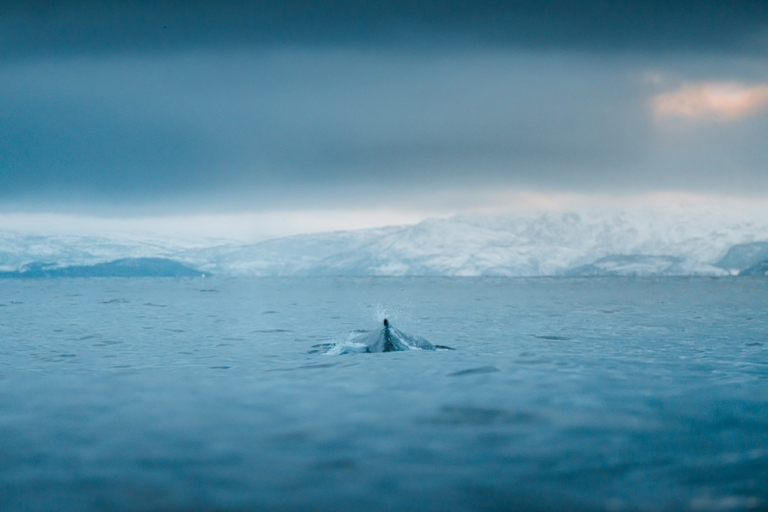
A blow rises in the distance, between two icebergs. A dark back breaks the surface, glides along, then disappears. In East Greenland, an encounter with a whale makes…
Orcas in Norway: who gives the signal to dive?
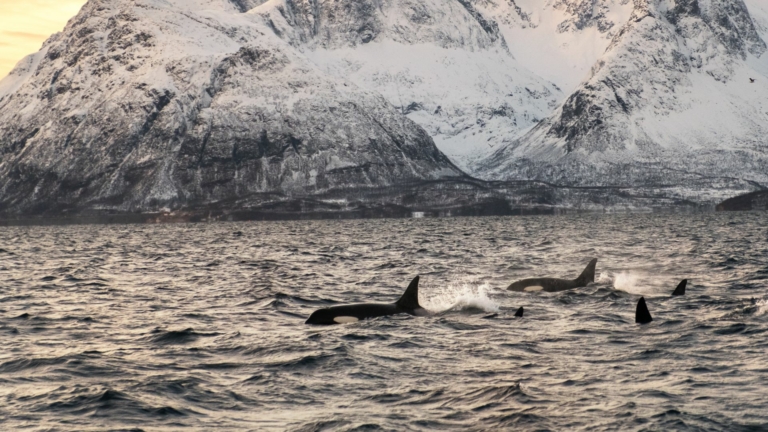
Several black fins slice through the surface. An orca takes a breath and disappears. A few seconds later, the others dive in turn. From a Zodiac, the scene…

In Greenland, narwhals reveal the secrets of the deep
On Greenland’s east coast, the fjords hide an essential part of their story beneath the surface. To explore these hard-to-reach depths, researchers enlisted some remarkable companions: six narwhals…